Content creation has evolved rapidly over the last decade. What once required large teams, professional studios, and expensive equipment can now be achieved with advanced digital tools. As the demand for video, audio, and interactive content continues to grow, creators are looking for ways to produce high quality media faster and more efficiently. Artificial intelligence has emerged as a major force in this transformation, helping creators generate scripts, visuals, voiceovers, and even music with minimal effort.
One of the most exciting developments in this space is the rise of AI tools that combine multiple creative capabilities into a single platform. Instead of relying on separate tools for audio production, voiceover recording, and music composition, creators can now generate these elements through intelligent systems that understand context and tone. MiniMax AI is gaining attention because it focuses on turning written text into professional audio and music tracks with remarkable speed and quality.
Understanding why tools like MiniMax AI are becoming so powerful helps creators, marketers, educators, and businesses build better content workflows. By combining automation with creative flexibility, AI tools are reshaping how media is produced and shared across digital platforms.
How is AI transforming the modern content creation process?
Artificial intelligence is changing the way content is produced by simplifying complex tasks that once required specialized skills. In traditional workflows, producing audio narration or music often meant hiring voice actors, recording in professional studios, and editing multiple versions before reaching a final result. This process required time, technical expertise, and financial investment.
AI tools reduce these barriers by allowing creators to generate high quality media directly from text prompts. Instead of recording voiceovers manually, creators can type a script and allow the system to produce speech that sounds natural and expressive. This shift enables individuals and small teams to produce professional level content without relying on large production setups.
Modern AI systems also understand emotional tone and pacing. This allows generated audio to match the mood of a project, whether it is educational narration, storytelling, advertising, or motivational speeches. As these systems continue to improve, they are becoming reliable partners in creative workflows.
What makes MiniMax AI different from traditional audio generation tools?
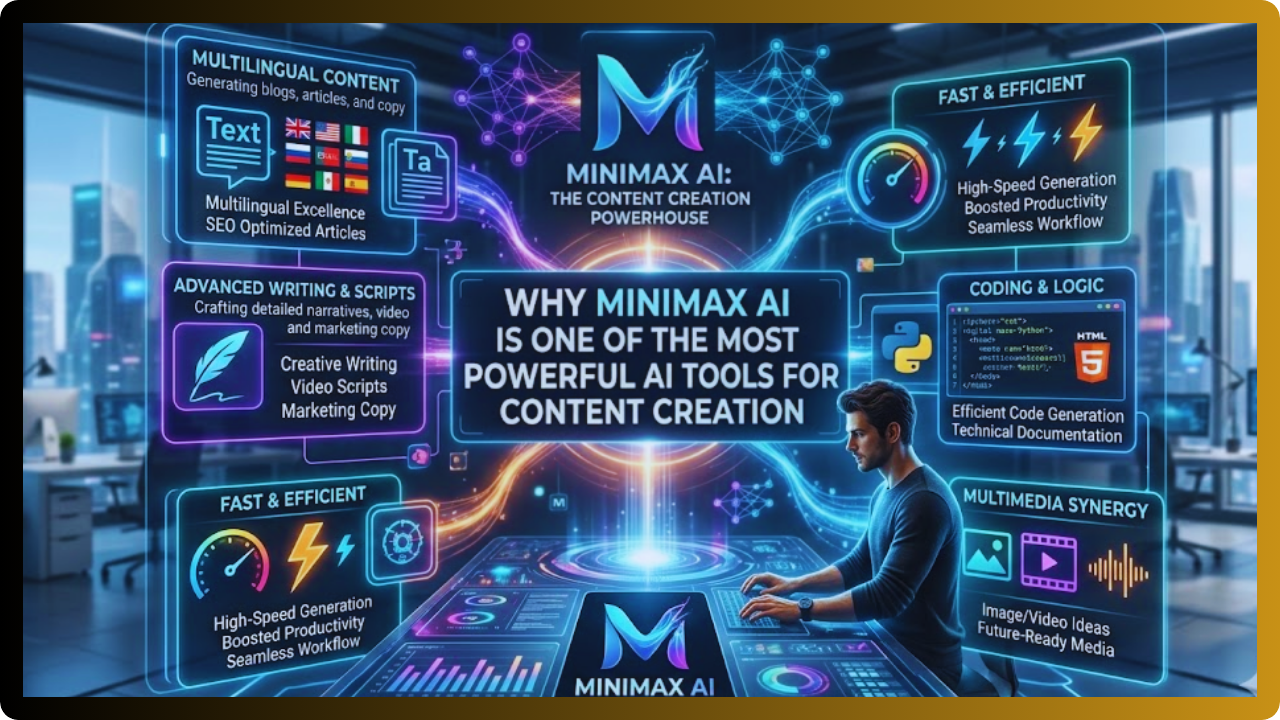
Many audio generation tools focus on a single task such as text to speech or music composition. MiniMax AI stands out because it integrates multiple capabilities within one environment. Creators can convert text into voiceovers, generate music tracks with vocals and instruments, and adjust emotional tone to match the purpose of the content.
Tools like minimax ai on invideo allow creators to experiment with voice styles, music structures, and audio pacing without switching between separate software platforms. This integrated approach simplifies the creative process and reduces the time needed to produce professional audio assets.
Content creators who produce videos, podcasts, or digital presentations can also combine AI audio generation with editing tools and publishing workflows. For creators working primarily on mobile devices, applications such as a video maker app make it easier to combine visuals and AI generated audio within a single production environment.
The ability to generate voiceovers, speeches, and music from text allows creators to focus more on storytelling and message clarity rather than technical recording processes.
How does MiniMax AI generate studio quality voiceovers from text?
Producing high quality voice narration traditionally required a recording studio, professional microphones, and experienced voice actors. MiniMax AI simplifies this process by using advanced speech generation models that analyze text and transform it into natural sounding audio.
When a creator provides written text, the system evaluates sentence structure, punctuation, and context to determine how the speech should sound. Elements such as pauses, emphasis, and emotional tone are automatically incorporated into the generated audio. This helps the final voiceover sound expressive rather than robotic.
Creators can experiment with different vocal styles depending on the project. For example, an educational video may require a calm and informative tone, while promotional content may benefit from energetic narration. By adjusting these parameters, creators can generate voiceovers that match the personality and purpose of their content.
The ability to generate professional voice narration instantly allows creators to iterate quickly and test different versions of their content before publishing.
How does AI generated music support storytelling and video production?
Music plays a critical role in shaping how audiences experience content. The right background track can enhance emotion, reinforce messaging, and improve overall engagement. However, producing or licensing music has traditionally been a complicated process.
MiniMax AI addresses this challenge by generating music tracks directly from prompts. Creators can specify the mood, style, and instrumentation they want, and the system produces audio that matches those characteristics. This capability makes it easier to add music to projects without navigating complex production workflows.
For example, a creator working on a travel video might request uplifting instrumental music with acoustic elements. A motivational video might require energetic music with strong rhythmic patterns. By describing the desired mood, creators can generate music that fits their narrative.
AI generated music also allows creators to experiment more freely. They can try different musical styles and quickly identify which one best supports the tone of the project.
Why is emotional control important in AI generated audio?
One of the most important aspects of effective storytelling is emotional connection. Whether delivering a speech, narrating a documentary, or producing educational content, the emotional tone of the audio influences how audiences interpret the message.
MiniMax AI incorporates emotional control into its audio generation system. Instead of producing neutral speech, the system can adjust vocal delivery to reflect specific moods. This might include enthusiasm, seriousness, calmness, or excitement depending on the context of the content.
This feature allows creators to align their audio with the intended audience experience. For example, a product announcement might benefit from an upbeat tone, while a reflective documentary narration may require a more thoughtful delivery.
By enabling emotional customization, AI generated audio becomes more engaging and expressive. This improves the overall quality of the content and helps maintain audience attention.
How does MiniMax AI improve productivity for content creators?
Content creators often manage multiple projects simultaneously. Producing scripts, recording voiceovers, editing audio, and sourcing music can quickly become overwhelming without efficient tools. AI driven systems like MiniMax AI help streamline these tasks by automating several stages of production.
Instead of spending hours recording and editing audio, creators can generate voiceovers and music tracks within minutes. This time savings allows them to focus on higher level creative decisions such as story structure, visual design, and audience engagement.
AI tools also support experimentation. Creators can generate multiple variations of a voiceover or music track and compare them quickly. This flexibility encourages creativity and allows creators to refine their projects without being limited by time or resources.
As content production continues to accelerate across digital platforms, productivity tools that reduce manual effort will become increasingly valuable.
How can creators integrate AI audio tools into their overall workflow?
AI audio generation tools are most effective when they are integrated into a broader content creation workflow. Voiceovers and music are often only one part of a larger project that may include visuals, scripts, editing, and publishing.
Creators can begin by developing a clear script or concept for their project. Once the narrative structure is established, AI audio tools can generate voice narration and background music that align with the message. These audio elements can then be combined with visuals, animations, or video footage.
The result is a streamlined production process where multiple creative elements come together quickly. This integration allows creators to produce polished content without needing extensive technical expertise.
By incorporating AI audio tools into their workflows, creators gain more control over their creative output while maintaining efficiency.
Conclusion
The rapid evolution of artificial intelligence is reshaping how digital content is created and distributed. Tools that once focused on a single creative task are now expanding to support entire production workflows. MiniMax AI is gaining recognition because it allows creators to convert text into expressive voiceovers, speeches, and music tracks with remarkable speed and quality.
By combining audio generation, emotional control, and flexible music creation within a single environment, MiniMax AI simplifies tasks that traditionally required specialized skills and expensive equipment. This makes professional audio production accessible to a much wider range of creators.