Food assistance programs help millions of households access basic groceries each month. In the United States, the Supplemental Nutrition Assistance Program offers this support through an electronic payment system. Instead of paper coupons, recipients receive benefits through a digital card. Many NGO organizations also support food access efforts through community outreach and nutrition assistance programs.
SNAP EBT Card Basics
The SNAP EBT card works like a standard debit card used for grocery purchases. Many recipients search for stores that accept SNAP EBT card payments before their first grocery trip. The card holds monthly food benefits provided through the SNAP program. Each transaction deducts the purchase amount from the balance.
After approval, the card arrives through the mail. Recipients receive a personal identification number used during checkout. This security step protects the account balance from misuse.
Grocery Stores That Accept SNAP Payments
Large supermarkets form the most common location for SNAP purchases. Most national grocery chains participate in the program because they sell staple food products. These stores often display signs near entrances or checkout counters that confirm EBT acceptance. This helps shoppers identify participating retailers quickly.
Neighborhood grocery stores may also accept SNAP payments. Eligibility depends on federal program rules related to food inventory. Retailers must offer a selection of staple foods such as dairy, grains, fruits, and vegetables. When stores meet these guidelines, they receive authorization to process EBT payments.
Approved Food Items for SNAP Purchases
SNAP benefits support the purchase of essential food products. Fresh produce, dairy products, bread, grains, and meat usually qualify under program rules. These foods help families maintain balanced meals throughout the month. Grocery stores process these items through the EBT payment system.
Prepared hot meals and restaurant food usually fall outside the program rules. Non-food products, such as cleaning supplies or household goods, also remain ineligible. Clear guidelines help retailers separate approved and restricted items at checkout. Many NGO organizations also share nutrition resources that help families choose healthy food within SNAP guidelines. This structure ensures benefits support grocery purchases.
Farmers Markets and Local Food Programs
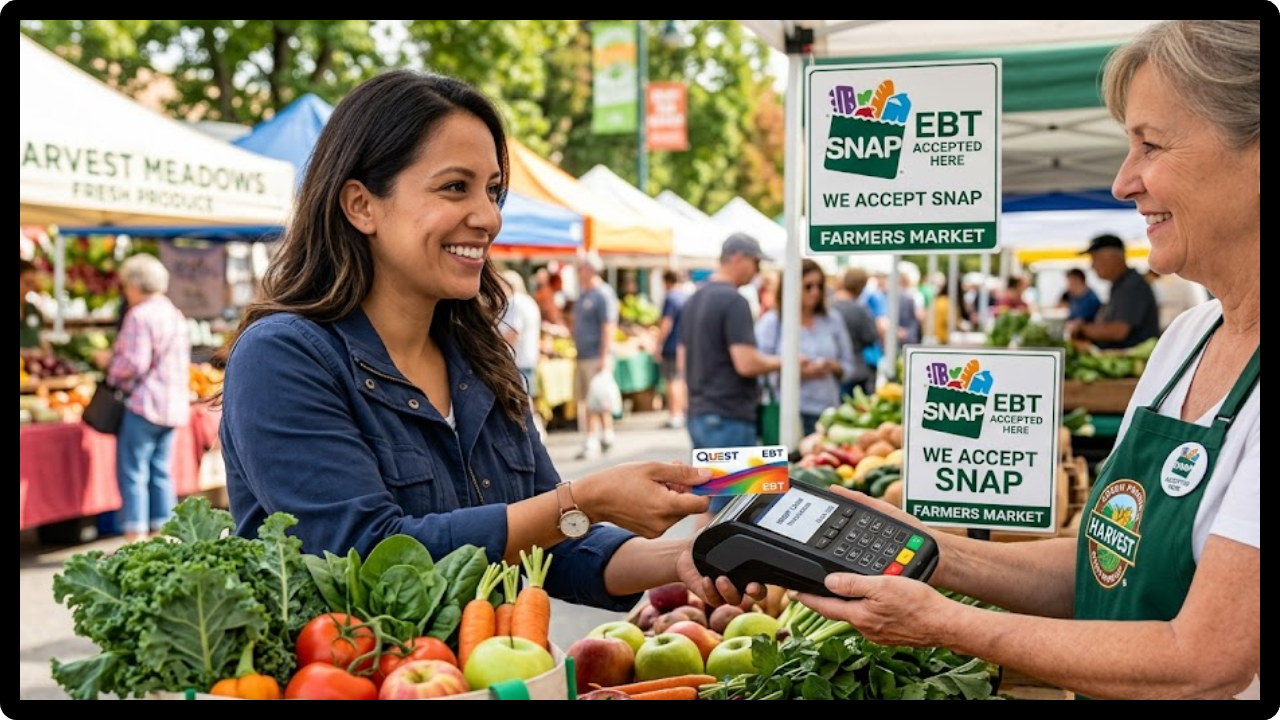
Many farmers’ markets now accept SNAP payments through wireless EBT systems. This allows families to purchase fresh fruits and vegetables directly from local farmers. Seasonal produce often appears at lower prices during harvest periods. These markets help expand food access in many communities.
Some markets also provide bonus produce credit for shoppers. These programs increase the value of benefits used on fruits and vegetables. Local partnerships often support these efforts. Community groups and nonprofit organizations help operate these programs.
Online Grocery Orders With EBT
Several grocery retailers now support SNAP purchases through online ordering. This option allows families to buy groceries through store websites or mobile apps. After order placement, shoppers select delivery or store pickup options. The EBT card processes eligible food items during checkout.
Online Retailers That Accept SNAP EBT
A growing number of retailers participate in the online purchasing system.
- Major supermarket chains that operate online grocery services
- Regional grocery stores that support pickup orders
- Selected national retailers that provide delivery services
- Online grocery platforms that partner with SNAP-approved stores
These services expand grocery access for households with limited transportation options.
Security and Responsible Card Use
The SNAP EBT card includes security features that protect benefit funds. Each transaction requires a personal identification number entered at checkout. This step prevents unauthorized use of the account balance. Cardholders should keep the PIN private at all times.
If a card becomes lost or stolen, the state agency must receive notice quickly. Most states provide a customer service number for this purpose. The agency can cancel the old card and issue a replacement. This process protects remaining benefits in the account.
Balance Checks and Monthly Benefit Deposits
The benefits appear in the account on a monthly schedule. Each state sets a specific deposit date based on case details. Recipients can check the card balance through receipts, phone services, or mobile apps. These options help track grocery spending.
Regular balance checks allow households to plan grocery purchases carefully. Some families divide grocery trips across the month to extend benefits. Careful planning supports steady access to essential food items. This approach helps avoid early balance depletion.
The SNAP EBT system offers a practical way for families to purchase groceries through approved retailers. Many households begin by learning about stores that accept SNAP EBT card payments before their first shopping trip. Once familiar with the process, the card works much like a regular debit card at checkout. With clear purchase rules and secure access, the system helps households maintain consistent food access each month.