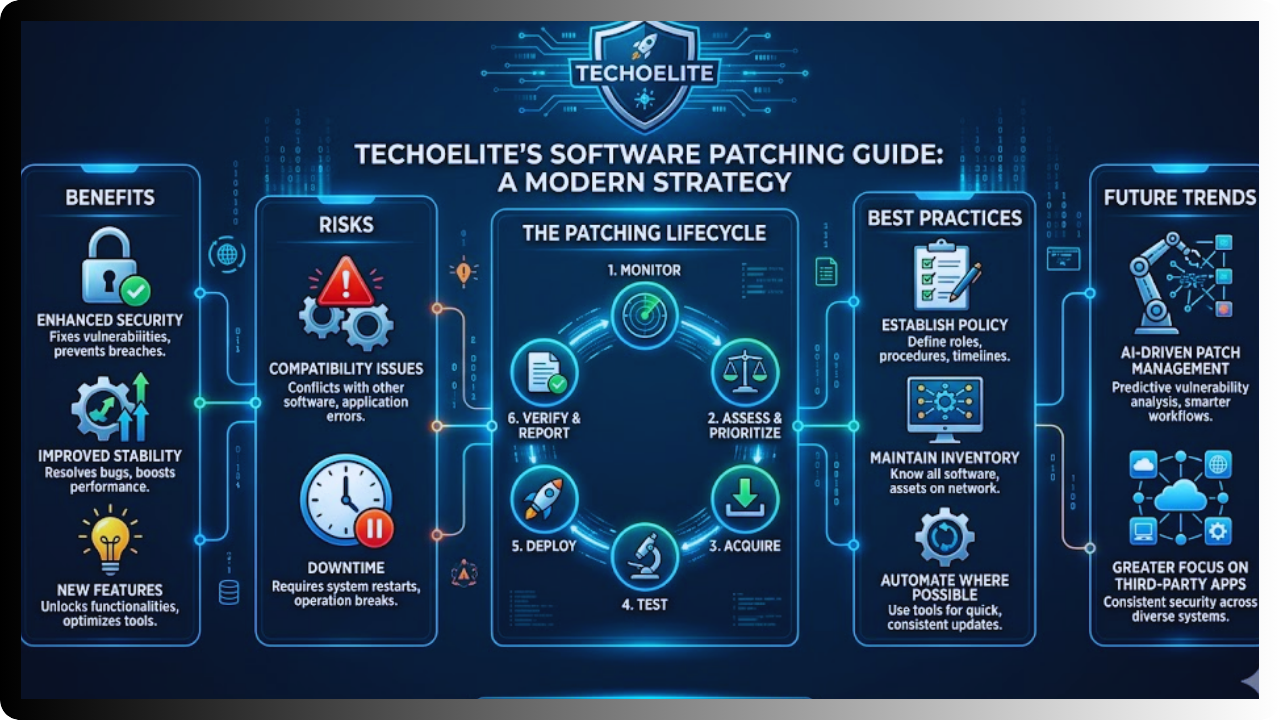
In the modern digital world, software maintenance has become a critical priority for both individuals and organizations. Software patches techoelite play a key role in keeping applications secure, efficient, and up to date. These updates are designed to fix errors, close security gaps, and improve system functionality without requiring a full reinstall. As technology continues to evolve, the importance of timely updates has increased significantly. Ignoring patches can lead to serious risks such as cyberattacks, system instability, and performance issues. Understanding how patching works helps users maintain a safe and reliable digital environment. Regular updates also help extend the lifespan of software systems by keeping them compatible with modern technologies. They ensure users can take advantage of new improvements without major disruptions. Ultimately, consistent patching supports long-term digital growth and stability. Regular patching also helps prevent compliance issues and protects business continuity. It encourages confidence in IT systems for both employees and customers. Staying current with updates ensures that software can adapt to emerging technologies seamlessly.
Who Is Software Patches TechoElite
Software patches techoelite is not a person but a concept or term often used to describe modern, efficient patch management practices and solutions. It represents a streamlined approach to updating software systems with a focus on security, performance, and reliability. The term highlights the importance of applying targeted updates that address vulnerabilities and improve system operations. In many cases, it is associated with advanced patching strategies that prioritize speed and accuracy. This approach ensures that systems remain protected against emerging threats while maintaining optimal performance. Overall, it reflects a smarter and more proactive way of managing software updates. It also emphasizes the growing need for automation in handling complex update processes. This concept is widely adopted in both personal and enterprise-level systems. As technology advances, such approaches continue to shape modern software maintenance practices. Effective patch management also reduces unexpected downtime and strengthens disaster recovery readiness. It ensures IT teams can allocate resources efficiently and focus on innovation. By implementing a structured patch strategy, organizations maintain a competitive technological edge.
Importance of Software Patches TechoElite
Security Protection and Threat Prevention
Software patches techoelite are essential for protecting systems from cyber threats that exploit known vulnerabilities. These updates close security gaps that hackers often target to gain unauthorized access. By applying patches regularly, users can significantly reduce the risk of malware infections and data breaches. Cybersecurity experts emphasize that outdated software is one of the leading causes of security incidents worldwide. Keeping systems updated ensures that defenses remain strong against evolving threats. This makes patching a fundamental part of any cybersecurity strategy. Regular updates also strengthen system resilience against newly emerging attack methods. They help organizations maintain trust by protecting sensitive user data. Consistent patching ultimately builds a more secure and dependable digital ecosystem. Security patches also help maintain regulatory compliance and prevent legal repercussions. They protect critical data infrastructure and customer information. Ultimately, they are a foundational component of enterprise IT security.
Benefits of Software Patches TechoElite
Performance and Stability Enhancements
One of the major advantages of software patches techoelite is improved system performance and stability. Updates often fix bugs that cause crashes, slowdowns, or unexpected behavior in applications. By resolving these issues, patches ensure smoother and more reliable operation. They also optimize resource usage, allowing software to run more efficiently on modern hardware. Over time, these improvements contribute to a better user experience. Consistent patching helps maintain a stable and high-performing system environment. Enhanced performance also supports increased productivity in both personal and professional use. Users experience fewer interruptions, leading to more efficient workflows. Overall, patches play a key role in maintaining a seamless digital experience. Regular updates also extend hardware lifespan by reducing system strain. They enhance compatibility with new applications and software platforms. In combination, these improvements improve overall IT efficiency and reliability.
Types of Software Patches TechoElite
Security, Bug Fix, and Feature Updates
Different types of software patches techoelite updates serve specific purposes in maintaining software health. Security patches address vulnerabilities that could be exploited by attackers, making them a top priority. Bug fix patches resolve coding errors that affect functionality or user experience. Performance updates improve speed and efficiency, ensuring smoother operation. Feature updates may introduce small enhancements that add value to the software. Together, these updates ensure that systems remain secure, functional, and up to date. Each type of patch contributes to a balanced and well-maintained system. Applying the right updates at the right time enhances overall effectiveness. This structured approach ensures continuous improvement in software quality. Timely application of all patch types maximizes system longevity. They also prevent technical debt from accumulating over time. These updates help organizations maintain a proactive IT posture.
How Software Patches TechoElite Improve Systems
Optimization and Compatibility Improvements
Software patches techoelite for system optimization and reliability ensure that applications perform at their best. These updates refine code, remove inefficiencies, and improve overall responsiveness. They also enhance compatibility with new operating systems and hardware, preventing conflicts and errors. As technology evolves, patches help software adapt to changing environments. This ongoing improvement process leads to a more efficient and reliable system. Regular updates are essential for maintaining long-term performance and stability. Improved compatibility ensures seamless integration with emerging technologies. This reduces the risk of system failures or disruptions. Ultimately, patching supports a future-ready digital infrastructure. Updates also enhance user experience and reduce troubleshooting costs. Compatibility testing ensures that patches work across all devices. Overall, patches are a critical tool for sustainable IT management.
Best Practices for Software Patches TechoElite
Effective Patch Management Strategies
Managing software patches techoelite effectively requires a proactive and structured approach to updates. Regular monitoring ensures that critical patches are identified and applied without delay. Prioritizing security updates helps protect systems from emerging threats and vulnerabilities. Testing updates before full deployment can prevent compatibility issues in complex environments. Maintaining data backups adds an extra layer of protection during the update process. A consistent patching strategy ensures systems remain secure and efficient over time. Organizations benefit from reduced downtime and improved operational efficiency. Proper planning also minimizes risks associated with failed updates. This approach ensures a smooth and reliable patch management process. Documentation of patch history supports compliance and audits. Standard operating procedures streamline recurring update cycles. Centralized management tools further enhance efficiency and reporting.
Risks of Ignoring Software Patches TechoElite
Security and Performance Consequences
Ignoring software patches techoelite can expose systems to serious security risks and performance issues. Unpatched vulnerabilities are a primary target for cybercriminals, leading to potential data breaches. Systems may also experience slow performance, crashes, and reduced efficiency over time. Outdated software can become incompatible with newer technologies, limiting functionality. Businesses may face compliance issues and reputational damage due to neglected updates. Regular patching is essential to avoid these negative outcomes. Security risks can escalate quickly if updates are continuously delayed. Performance degradation can impact productivity and user satisfaction. Staying updated is crucial for maintaining a secure and efficient system. Ignored patches can also increase recovery costs after incidents. Neglecting patches puts both data and user trust at risk. Long-term system maintenance becomes more challenging without consistent updates.
Future Trends in Software Patches TechoElite
Automation and Smart Update Systems
The future of software patches techoelite is evolving with the integration of automation and intelligent technologies. Automated patching systems can detect vulnerabilities and apply updates with minimal human intervention. Artificial intelligence is being used to predict potential issues and deliver proactive solutions. Cloud-based patch management allows real-time updates across multiple devices and locations. These advancements are making patching faster, more efficient, and more reliable. Staying updated with these trends ensures long-term security and performance. Automation reduces the workload on IT teams and improves accuracy. Intelligent systems enhance the speed of detecting and fixing vulnerabilities. This evolution is shaping a more advanced and secure digital future. Predictive analytics allow organizations to prioritize high-risk patches. Smart updates minimize downtime and user disruption. Overall, these trends improve enterprise IT resilience and agility.
Understanding Patch Deployment Timelines
Knowing when and how to deploy patches is critical to avoid disruption. Properly planned timelines ensure updates are applied safely without affecting ongoing operations. Delays in patch deployment can expose systems to unnecessary risks. Organizations often create schedules to prioritize critical updates. Regular deployment keeps systems aligned with the latest security and performance standards. Well-defined timelines also help allocate IT resources efficiently and prevent last-minute emergencies. Planning updates in stages minimizes downtime and ensures critical systems remain operational. Organizations can coordinate with stakeholders to inform them of upcoming changes. Predictable deployment schedules enhance overall IT governance. Ultimately, clear timelines reduce errors and maintain trust in IT operations.
Patch Testing and Validation Importance
Before applying patches widely, testing ensures compatibility with existing systems. This helps identify potential conflicts that could cause errors. Validation ensures that updates work as intended and do not introduce new issues. Proper testing reduces downtime and increases confidence in patch deployment. Testing also allows IT teams to simulate various scenarios, identifying edge cases before updates go live. Validation ensures compliance with industry regulations and internal policies. It prevents disruptions in critical business processes that rely on patched systems. Automated testing tools can accelerate the process and provide more accurate results. Thorough testing protects against user complaints and operational inefficiencies. Testing also reduces the risk of cascading failures. Validated patches improve reliability and user satisfaction. Overall, patch validation is essential for a smooth and reliable update process.
Impact of Patches on Business Continuity
Software patches techoelite contribute to business continuity by preventing system failures. Timely updates reduce downtime and operational interruptions. They also protect against data loss and maintain productivity. Businesses that prioritize patching maintain smoother operations and stronger customer trust. Regular updates help prevent cascading failures in interconnected systems. By addressing known vulnerabilities, patches reduce the likelihood of unexpected outages. Continuous patch management ensures that backup and recovery systems remain functional. Proactive patching enhances resilience against cyberattacks and technical errors. Companies can maintain service-level agreements (SLAs) with clients more effectively. In the long term, consistent patching supports sustainable and uninterrupted business operations. Patch management also reduces recovery costs after failures. It strengthens client confidence in IT infrastructure. Overall, patching is vital for uninterrupted business operations.
Role of Automated Patch Management
Automated patch management simplifies update processes for organizations. It allows systems to be patched without manual intervention. Automation improves accuracy, reduces human error, and ensures timely updates. This leads to a more efficient and secure IT environment. Automated systems can monitor multiple devices and software versions simultaneously. They reduce the workload on IT teams, allowing them to focus on strategic tasks. Automation ensures critical security patches are applied immediately. Reporting features provide real-time insights into patch status. Integration with other IT management tools enhances overall operational efficiency. In short, automation makes patching scalable, reliable, and fast. Automated scheduling also helps avoid missed updates. It reduces administrative overhead for IT teams. The system can also generate audit-ready logs for compliance.
Monitoring and Reporting Updates
Continuous monitoring of patch status helps organizations track update success. Reporting tools highlight missing or failed updates. This transparency ensures no systems remain vulnerable. Monitoring also supports compliance and auditing requirements. Real-time dashboards help IT teams respond quickly to patch failures. Tracking update history provides insights into system health over time. Reporting facilitates communication with management about system readiness. Monitoring helps identify recurring issues and patterns that need attention. Regular review of patch metrics improves long-term planning. Effective monitoring ensures that patching processes remain efficient and accountable. Analytics also help forecast future patch needs. Monitoring enhances accountability and IT governance. Teams can adjust strategies proactively to maintain security.
Challenges in Patch Management
Managing software patches can be complex due to multiple systems and software versions. Compatibility issues and resource limitations can complicate deployment. Organizations must balance security needs with operational stability to ensure successful patching. Variations in hardware and software configurations create additional testing requirements. Limited IT staff and time constraints may delay patch application. Conflicts between patches can introduce unexpected system errors. Keeping track of vendor updates and release notes is challenging. Legacy systems may require customized patch solutions. Effective communication and planning are critical to overcome these challenges. Addressing these obstacles ensures a smoother, more secure patch management process. Budget restrictions may limit access to automation tools. Prioritizing high-risk patches is necessary in large environments. Continuous training of IT staff reduces human error during patching.
Cost-Benefit of Regular Patching
While patching requires time and resources, the benefits outweigh the costs. Preventing security breaches, downtime, and performance issues saves organizations significant expenses. Investing in patch management ensures long-term system stability. Regular updates reduce potential costs from data breaches or system failures. Efficient patching minimizes operational disruptions that can impact revenue. Organizations maintain customer trust by preventing security incidents. The cost of patching is far less than the potential financial impact of unpatched vulnerabilities. Proper patch management also improves employee productivity by avoiding system issues. Over time, patching reduces emergency IT expenditures. Overall, patching provides measurable returns on investment through security and reliability. Long-term savings include reduced technical debt. Patching increases system lifecycle efficiency. The organization gains operational predictability and efficiency.
User Awareness and Training for Patches
Educating users about the importance of updates encourages timely adoption. Training helps prevent delays in installing critical patches. Awareness reduces the risk of human error in patch management and strengthens overall cybersecurity. Users trained in patch procedures can assist IT teams with deployment. Awareness campaigns increase compliance with organizational policies. Training also helps employees understand the risks of ignoring updates. Educated users are more likely to report issues promptly. Clear communication reduces confusion during patch cycles. This proactive approach enhances overall system security. Ultimately, user engagement supports a successful patch management program. Awareness programs also boost user confidence in IT systems. Employees can recognize suspicious activity earlier. Continuous education reinforces a security-first culture.
Long-Term Advantages of Software Patches
Regular patching creates a sustainable, secure software environment. It improves performance, stability, and adaptability to new technology. Over time, patching ensures systems remain competitive and reliable for years to come. Long-term patching reduces technical debt and maintenance costs. It strengthens system resilience against emerging cyber threats. Consistent updates allow organizations to adopt new features without major disruptions. Patch history provides valuable insights for future IT planning. Patching fosters trust in IT infrastructure among users and stakeholders. Ultimately, a disciplined patching approach ensures operational efficiency and long-term success. It establishes a robust foundation for digital transformation initiatives. Reliable patching improves system scalability. It increases IT operational efficiency and reduces risk. Patching contributes to a future-ready and secure IT environment.
FAQs
What are software patches techoelite?
They are updates that fix bugs, improve performance, and enhance software security.
Why are software patches important?
They protect systems from vulnerabilities and ensure smooth performance.
How often should patches be installed?
Patches should be installed immediately when available, especially security updates.
Can software patches improve performance?
Yes, they optimize system speed, stability, and efficiency.
What happens if patches are ignored?
Ignoring patches can lead to security risks, crashes, and outdated software issues.
Final Thoughts
In conclusion, software patches techoelite are a vital component of modern software management. They ensure systems remain secure, efficient, and aligned with current technological standards. Regular updates protect against cyber threats while improving overall performance and stability. Ignoring patches can expose systems to serious risks and operational challenges. By adopting a proactive approach to updates, users can maintain a reliable and secure digital environment. In today’s fast-paced tech landscape, staying updated is not just important—it is essential. Regular updates also help extend the lifespan of software systems by keeping them compatible with modern technologies. They ensure users can take advantage of new improvements without major disruptions. Ultimately, consistent patching supports long-term digital growth and stability. Patching also reinforces compliance with regulatory standards. It improves user confidence and operational efficiency. Organizations that maintain disciplined patch management gain a future-ready IT infrastructure.