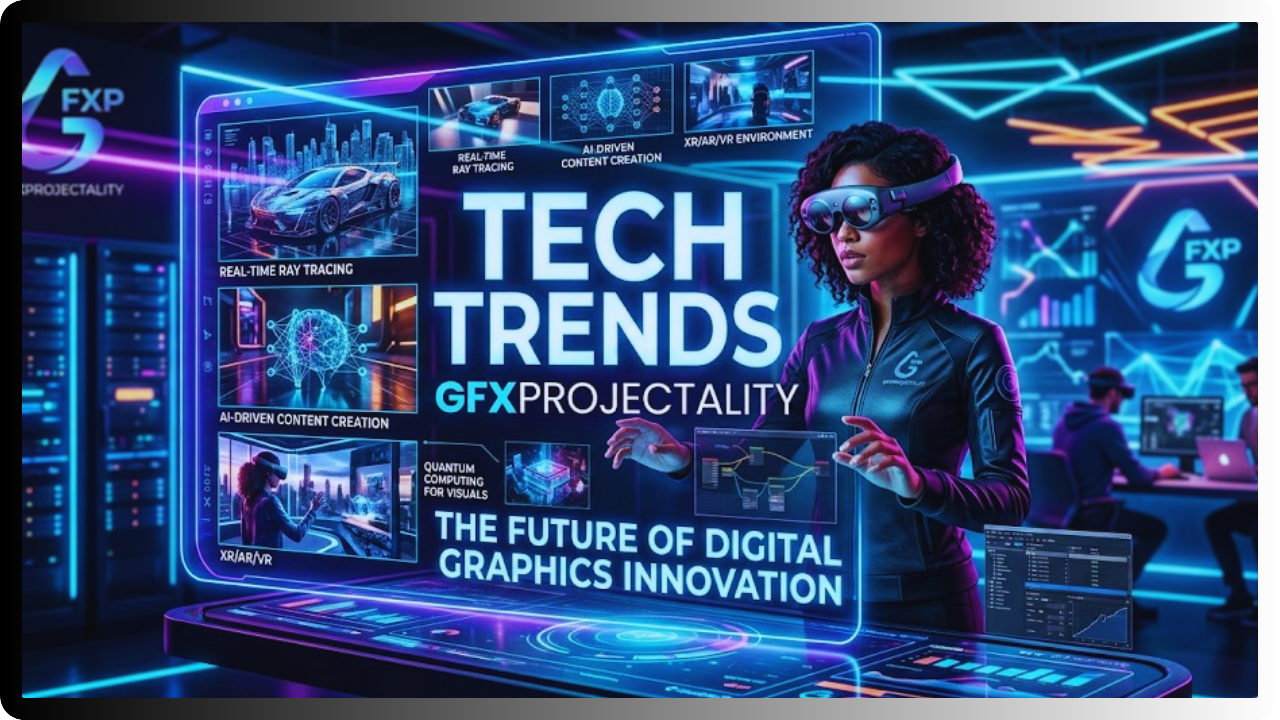
Technology continues to reshape the way digital visuals are created and experienced. One concept gaining attention in modern discussions is tech trends gfxprojectality, which represents the combination of advanced graphics systems, immersive technologies, and intelligent design tools. These innovations are transforming how digital content is produced across industries such as gaming, education, marketing, and architecture. The demand for high-quality visuals and interactive environments is growing rapidly in the digital era. As a result, developers and designers are exploring new tools that can deliver more realistic and engaging experiences. Understanding tech trends gfxprojectality helps explain how emerging technologies are redefining the future of digital graphics. Modern design workflows increasingly rely on these trends to streamline processes while boosting creative output.
Who Is Tech Trends GFXProjectality
The term tech trends gfxprojectality refers to a modern technological movement that focuses on combining graphics innovation with powerful digital systems. It represents the integration of artificial intelligence, immersive visualization, and high-performance computing to create advanced visual environments. These technologies allow creators to design highly detailed graphics with improved efficiency and precision. The idea behind this concept is to enhance digital storytelling and user engagement through visually rich experiences. As digital platforms evolve, this approach becomes more important for businesses and creative professionals. In many ways, tech trends gfxprojectality represents the next stage of digital creativity and technological advancement. It also inspires cross-industry innovation by bringing tools from gaming, film, and marketing into new professional applications.
Artificial Intelligence in Tech Trends GFXProjectality
AI-Driven Graphics Innovation
Artificial intelligence is playing a major role in shaping tech trends gfxprojectality by improving how graphics are designed and optimized. AI algorithms can analyze images, generate visual concepts, and automate time-consuming design tasks. This allows designers to focus more on creativity and strategy instead of repetitive editing work. Machine learning systems also help enhance image quality by adjusting lighting, colors, and textures automatically. As a result, digital visuals become more realistic and visually appealing. AI is also capable of predicting design trends and suggesting improvements that keep visuals modern and engaging. The integration of AI continues to accelerate innovation within the graphics industry and opens doors for entirely new creative workflows. These AI-powered tools are also helping smaller studios produce professional-grade visuals more efficiently.
Immersive Technologies Transforming Digital Experiences
Virtual and Augmented Reality Integration
Immersive technologies such as virtual reality and augmented reality are essential components of tech trends gfxprojectality. These technologies allow users to interact with digital environments in a more engaging and realistic way. Virtual reality creates fully simulated worlds where users can explore digital spaces from a first-person perspective. Augmented reality, on the other hand, overlays digital elements onto real-world environments. Together, these technologies enhance storytelling and interactive design. VR and AR also improve accessibility, allowing remote users to experience realistic simulations for education, training, or entertainment. Their growing popularity is expanding the possibilities of modern graphics development and shaping the future of interactive media. Immersive tools are now being integrated into marketing campaigns, architectural visualization, and remote collaboration platforms.
Real-Time Rendering and Visual Performance
Instant Graphics Processing
Real-time rendering has become a key factor in the growth of tech trends gfxprojectality. This technology allows digital visuals to be processed instantly rather than waiting for long rendering times. Modern graphics engines can display dynamic lighting, reflections, and shadows within milliseconds. This capability is essential for gaming, simulations, and interactive applications. Faster rendering speeds improve workflow efficiency for designers and developers. Real-time rendering also enables designers to test changes instantly, providing immediate feedback that enhances creativity. As computing power increases, real-time graphics will continue to evolve and deliver even more impressive visual results. Designers are now able to create immersive experiences that were previously impossible due to hardware or time limitations.
Cloud Technology and Collaborative Design
Cloud-Based Graphics Development
Cloud computing is another important technology supporting tech trends gfxprojectality. By using cloud platforms, designers can collaborate on graphic projects from different locations without relying on powerful local hardware. Cloud servers provide the processing power needed to handle complex visual tasks. This makes advanced graphics production more accessible to individuals and teams around the world. Cloud-based workflows also make it easier to store and share large design files securely. Teams can now access high-quality resources without hardware limitations, ensuring consistent results across different devices. As remote work continues to grow, cloud technology will remain an essential part of digital graphics innovation and global collaboration. Cloud-based tools are increasingly being adopted by small studios, independent creators, and large enterprises alike.
Industries Adopting Tech Trends GFXProjectality
Expanding Use Across Multiple Sectors
Many industries are benefiting from the development of tech trends gfxprojectality. The gaming industry uses advanced graphics engines to create realistic virtual environments that enhance player experiences. Educational institutions use immersive visual tools to make learning more interactive and engaging. Architects rely on advanced visualization software to present detailed building designs before construction begins. Marketing teams also use high-quality digital graphics to capture audience attention in competitive markets. Healthcare and simulation-based industries are integrating these technologies for training and procedural testing. These examples show how modern graphics technologies are influencing many areas of the digital economy and transforming how professionals approach creative and technical challenges. Digital media companies are also leveraging these trends to improve content creation pipelines and audience engagement metrics.
Benefits of Tech Trends GFXProjectality
Enhancing Creativity and Innovation
One of the most significant advantages of tech trends gfxprojectality is its ability to enhance creativity within digital design. Advanced graphics tools and intelligent software allow creators to experiment with complex visual ideas that were once difficult to produce. Designers can build detailed digital environments, realistic animations, and interactive experiences that capture audience attention. This technology also speeds up production processes, allowing teams to complete projects more efficiently. Businesses benefit from more engaging visual communication and stronger digital branding. AI and immersive tools enable designers to explore unique concepts that were previously impossible to visualize. As innovation continues, the creative possibilities within this field will expand even further, opening opportunities for experimentation across multiple industries. Teams now have the ability to iterate rapidly and refine designs based on immediate feedback.
Future of Tech Trends GFXProjectality
Emerging Innovations and Opportunities
The future of tech trends gfxprojectality is expected to bring even more groundbreaking innovations. Advances in artificial intelligence, spatial computing, and immersive media will continue pushing the boundaries of digital design. Developers will create increasingly realistic environments that blur the line between virtual and real worlds. As these technologies mature, they will become more accessible to creators and businesses of all sizes. The continued growth of this field will redefine how people communicate, learn, and interact with digital content. Emerging tools will allow smaller studios and independent designers to produce professional-grade visuals with minimal resources. The future promises deeper integration of AI, real-time rendering, and immersive environments across all aspects of creative production. Companies that adopt these trends early are likely to gain significant competitive advantages.
Emerging Hardware Innovations
Advances in computer hardware are driving tech trends gfxprojectality to new levels of performance. Graphics cards, CPUs, and memory systems now support complex visual computations that were previously impossible on consumer devices. High-performance hardware allows designers to render real-time simulations, large 3D environments, and high-resolution textures efficiently. These hardware improvements are making immersive technology more accessible to smaller studios and independent creators. The combination of advanced hardware and intelligent software is unlocking new creative opportunities for digital media professionals. Next-generation hardware also reduces rendering times and improves visual fidelity across multiple platforms. These developments are enabling richer, more interactive content that was previously limited to high-end workstations. Designers can now experiment with larger-scale projects without worrying about system constraints.
Mobile and Cross-Platform Graphics
Mobile devices are increasingly capable of handling tech trends gfxprojectality applications. Smartphones and tablets now support high-resolution graphics and AR-based experiences. Cross-platform development tools allow creators to build visuals that work seamlessly across different devices. This expands the audience reach and enables interactive experiences on the go. Mobile graphics technology is particularly important for gaming, marketing, and educational applications. The accessibility of mobile platforms is accelerating the adoption of immersive digital solutions. With cloud integration, mobile devices can now access high-end rendering capabilities that were once only possible on desktops. This democratization of graphics technology is enabling more creators to enter the digital content space.
Advanced Animation Techniques
Animation technology has improved significantly with tech trends gfxprojectality. Motion capture systems, procedural animation, and AI-assisted rigging allow designers to create lifelike movements in digital characters and environments. Animations now integrate more naturally into interactive experiences, enhancing immersion. These techniques save time and improve the visual quality of digital projects. The combination of real-time animation and AI-driven tools is transforming how designers create dynamic content for multiple industries. Animators can now simulate physics-based movements and environmental interactions in real time. This allows for more realistic storytelling in games, films, and VR/AR applications. High-quality animation also improves user engagement and strengthens brand impact in visual media.
High-Fidelity Textures and Materials
High-fidelity textures and materials are an important aspect of tech trends gfxprojectality. Advanced rendering engines now simulate real-world surfaces with incredible detail, including reflections, roughness, and transparency. These improvements create highly realistic digital environments that enhance user engagement. Designers can apply textures to models, animations, and immersive environments with precision. The ability to produce lifelike materials is critical for gaming, film, and virtual design applications. These textures also improve realism in virtual simulations, enhancing immersion and believability. As software tools evolve, designers can create entirely new materials procedurally. This allows for endless visual variation and more compelling digital experiences.
Interactive Storytelling
Interactive storytelling is central to tech trends gfxprojectality. By combining immersive graphics with user-driven experiences, creators can engage audiences in new ways. Story elements now adapt to user choices, making the experience more personalized and memorable. Designers are increasingly using interactive storytelling for marketing, education, and entertainment. This approach leverages both AI and real-time rendering to deliver seamless narrative experiences. Interactive storytelling encourages longer user engagement and promotes deeper understanding of content. It also allows brands and educators to craft meaningful experiences that resonate with their audiences. The integration of visuals, sound, and interactivity ensures a more compelling digital narrative.
Virtual Collaboration Tools
Virtual collaboration is becoming more important in tech trends gfxprojectality. Designers, developers, and clients can now work together in shared virtual spaces, reducing the need for physical meetings. These tools improve workflow efficiency and facilitate faster decision-making. Teams can interact with 3D models and immersive environments simultaneously from different locations. The combination of cloud technology and VR/AR makes collaboration more dynamic and visually intuitive. Collaboration tools also enable global teams to access the same resources in real time. This helps reduce errors and ensures consistent design quality across projects. Such tools are particularly valuable for large-scale productions and international creative teams.
Sustainable Graphics Solutions
Sustainability is also becoming a priority in tech trends gfxprojectality. Energy-efficient rendering systems and optimized workflows reduce computational waste. Digital tools now allow creators to simulate real-world energy usage in virtual projects. Companies are increasingly integrating sustainability metrics into their graphics pipelines. This focus ensures that immersive and high-performance visuals can coexist with environmentally responsible practices. Sustainable solutions also encourage the adoption of greener cloud infrastructure and efficient hardware use. Designers can now produce high-quality visuals with a lower environmental footprint. This is becoming a key consideration for studios and developers committed to responsible technology.
AI-Powered Simulation and Training
Simulation and training programs are enhanced through tech trends gfxprojectality. AI-driven models create realistic training scenarios for industries such as healthcare, aviation, and engineering. Users can practice complex tasks safely in virtual environments. The integration of AI ensures simulations adapt to user performance, providing better learning outcomes. These solutions are reducing costs and improving skill development across professional sectors. AI simulations can also generate new scenarios based on previous user interactions. This makes training more dynamic, effective, and adaptable to real-world changes. Virtual training now allows employees to gain confidence without risking costly errors.
Mixed Reality in Everyday Applications
Mixed reality combines AR and VR to extend tech trends gfxprojectality into everyday applications. Retail, education, and entertainment industries are integrating MR experiences for interactive user engagement. This technology blends real-world and digital elements seamlessly, creating immersive experiences. Businesses use MR to showcase products, teach skills, and deliver interactive content. As MR hardware becomes more affordable, its adoption in digital graphics will continue to rise. MR also supports collaborative experiences where users can manipulate digital objects together in real time. Its applications are expanding rapidly across professional, educational, and consumer-focused industries. Mixed reality is now bridging the gap between physical and digital worlds effectively.
Realistic Character Design
Character design is a key focus area in tech trends gfxprojectality. Modern tools enable the creation of lifelike digital characters with expressive animations and detailed textures. Designers can produce characters for games, films, and simulations with unprecedented realism. AI-powered systems further enhance character behavior and interaction within virtual environments. This advancement is shaping immersive storytelling and digital content creation. Characters can now react to user input and environmental changes in real time. These innovations improve engagement and deepen narrative immersion. Designers are also experimenting with procedural generation for realistic variations in character design.
Advanced Lighting and Visual Effects
Lighting and visual effects are essential in tech trends gfxprojectality to create depth and realism. Dynamic lighting systems, particle effects, and post-processing techniques improve visual fidelity. These effects help designers deliver more engaging and realistic scenes. Real-time adjustment of lighting also enhances user interaction in digital environments. Advanced lighting solutions are now standard in gaming, film, and VR/AR projects. Light simulation also allows for accurate mood, atmosphere, and aesthetic storytelling. Designers can experiment with complex lighting setups without extensive rendering time. This ensures visual consistency and enhances immersive experiences across digital projects.
Cross-Industry Innovation
Finally, tech trends gfxprojectality are fostering cross-industry innovation. Technologies initially developed for gaming or film are now applied in healthcare, education, architecture, and marketing. This cross-pollination drives creative problem-solving and new business opportunities. Professionals can adapt tools and workflows from one sector to another. The result is faster innovation and more effective visual communication. By sharing workflows, software, and visualization techniques, industries accelerate adoption of new digital tools. Cross-industry collaboration promotes creativity and ensures technology benefits multiple sectors. This leads to groundbreaking projects and more impactful digital experiences overall.
FAQs
What is tech trends gfxprojectality?
It refers to modern technologies that combine advanced graphics, AI, and immersive systems to create innovative digital visual experiences.
Why is tech trends gfxprojectality important?
It improves digital design, enhances user interaction, and supports advanced visual storytelling across many industries.
Which technologies are included in tech trends gfxprojectality?
Key technologies include artificial intelligence, virtual reality, augmented reality, real-time rendering, and cloud computing.
Which industries benefit from gfxprojectality trends?
Gaming, education, architecture, marketing, and digital media industries benefit greatly from these innovations.
What is the future of tech trends gfxprojectality?
The future will involve more immersive environments, smarter AI design tools, and faster graphics processing technologies.
- You May Like this:Latest Tech Info at Beaconsoft AI Cloud Cybersecurity Emerging Trends
Final Thoughts
The rise of tech trends gfxprojectality highlights how modern technology is transforming the world of digital graphics and interactive experiences. By combining artificial intelligence, immersive technologies, and powerful computing systems, creators can produce highly engaging digital environments. These innovations are influencing industries ranging from entertainment to education and business. As technology continues to evolve, the possibilities for visual storytelling and digital interaction will expand even further. Understanding these trends helps individuals and organizations prepare for the next generation of creative technology. Businesses and educators that embrace these trends will gain a significant advantage in digital engagement. Immersive graphics, AI-powered tools, and collaborative workflows will continue to redefine creativity and user experiences in the years to come.