
Skipping a dental appointment because your stomach drops at the thought of sitting in the chair? You’re not alone, and there’s nothing unusual about it. Globally, about 15% of adults are affected by dental fear and anxiety, with a notable 12.4% suffering from high levels, and approximately 3.3% experiencing severe dental anxiety or dental phobia. Those numbers cover a huge slice of the population, meaning dentists see nervous patients every single day.
The real problem with avoiding the dentist isn’t the anxiety itself. Avoidance behaviour correlates with increased anxiety, as does postponing dental visits until severe pain occurs. So the longer you wait, the harder it gets. Your teeth also pay the price. The good news is that dental anxiety is manageable, and a few concrete changes to how you think about and prepare for appointments can genuinely make those visits easier. Here are seven strategies that work.
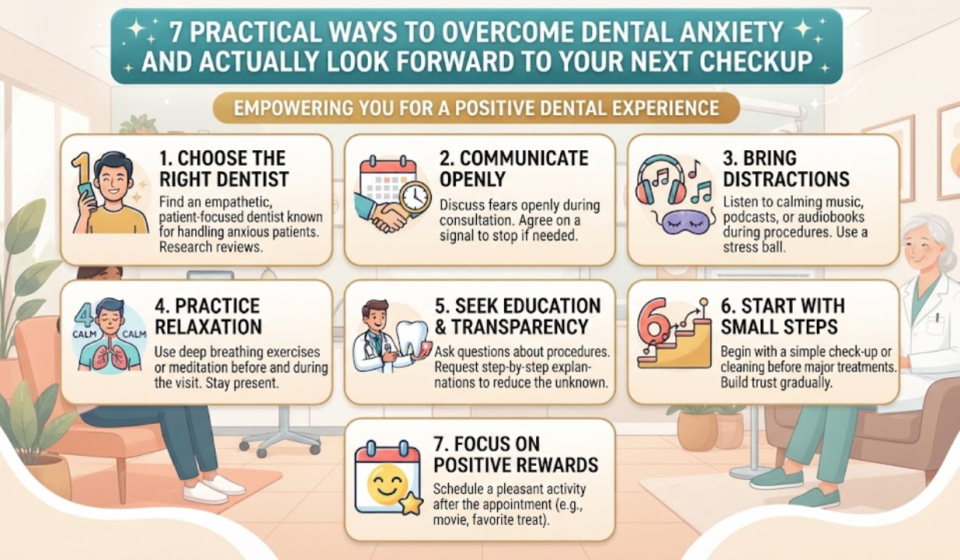
1. Tell Your Dentist Exactly What Scares You
This sounds simple, but most people stay quiet and white-knuckle through their appointments. That silence doesn’t serve you. Being transparent about your fears allows your dentist to walk you through your procedure or routine cleaning in a way that is helpful to you and can calm your nerves.
Before your next visit, write down what specifically bothers you. Is it the needle? The sound of the drill? The loss of control? Informing your dentist and dental staff about your fears, triggers, and past experiences allows them to adapt their techniques, provide reassurance, and proceed at a pace that feels comfortable for you. You’re not being dramatic. You’re giving your care team the information they need to help you.
Don’t be afraid to ask questions. If you understand the procedure, you may feel less anxiety. A good dental team will always have time to explain what’s coming next. Practices that prioritize patient comfort, like a maple ridge dentist who focuses on individualized treatment and a gentle approach, build their entire patient experience around exactly this kind of open communication.
2. Control Your Breathing Before and During the Appointment
Your breath is one of the fastest levers you have over your nervous system. When anxiety spikes, breathing becomes shallow and fast, which tells your brain that something is wrong. You can interrupt that cycle deliberately.
Deep breathing exercises can relax your mind and help you feel calmer. These exercises can reduce stress during dental appointments. The technique itself is straightforward: close your eyes and slowly inhale through your nose. Hold it for a few seconds, and then slowly exhale through your mouth.
A slightly more structured version is the box breath. Simply inhale deeply through your nose for four counts, hold your breath for four counts, and then exhale slowly. Repeat that cycle four or five times before the dentist begins any work, and then return to it whenever you feel tension rising. It takes about 60 seconds and costs nothing.
3. Book Your Appointment at the Right Time of Day
Timing matters more than most people realize. If you schedule a dental appointment for 4 p.m. on a Tuesday, you’ll spend the whole morning dreading it. It is often ideal to make your appointment for first thing in the morning so you are not worrying about it all day. Also, schedule your visit at non-rushed times to help you remain calm.
Plan ahead. Schedule an appointment on a day where you won’t be really busy or in a rush to get somewhere directly after. This allows the body an opportunity to relax. Give yourself permission to treat the appointment as a standalone event rather than one more item sandwiched between work calls and school pickup. The mental runway before and after the visit genuinely changes how the experience feels.
Also consider what you eat beforehand. Before your appointment, avoid foods with high sugars or caffeine, as they may make you more jittery and contribute to your nerves. Instead, try something that has calming properties, like caffeine-free tea. A calm stomach contributes to a calm mind.
4. Use Distraction Strategically
Your brain can only focus on so much at once. Distraction isn’t avoidance; it’s a legitimate anxiety-management tool that works while the procedure is actually happening. Distraction techniques such as listening to music or an audiobook, playing a game on your phone, or focusing on a specific object in the room can help take your mind off the procedure and reduce anxiety.
Bringing headphones to listen to calming music or podcasts during your appointment can help you relax while blocking out external noises that may trigger anxiety. If a television is mounted above the dental chair, keeping your eyes on the screen can help distract you. The sound of dental instruments is one of the most commonly cited triggers for anxious patients, so covering it with audio you actually enjoy is a practical fix.
You can bring comfort items from home, such as a stress ball or fidget toy, to help channel nervous energy and reduce stress levels. Having something to squeeze during a procedure gives your body an outlet for physical tension without interfering with what the dentist is doing.
5. Request a Stop Signal
One of the biggest drivers of dental anxiety is the feeling that you have no control once you’re in the chair. You can change that instantly by setting up a simple hand signal with your dentist before the appointment begins. Raise your left hand and the dentist stops. That’s it.
Anxiety can build up during longer procedures, making it important to take breaks when necessary. Do not hesitate to ask your dentist to pause if you feel overwhelmed. Short breaks allow you to regroup, practice breathing techniques, and regain a sense of control before continuing.
Knowing the stop signal exists often means you never have to use it. The sense of control it provides is enough to keep anxiety from spiraling. Any dentist worth their chair will agree to this arrangement without hesitation. If they don’t, that tells you something important about the practice.
6. Start with the Smallest Possible Step
If you’ve avoided the dentist for years, jumping straight into a crown or a deep clean feels overwhelming. That’s understandable. The smarter approach is to build up gradually. If dental anxiety has kept you away from the dentist for a long time, consider starting with simple, non-invasive visits such as routine cleanings or consultations. Gradually building positive experiences can help reshape your perception of dental care and reduce fear over time. Each successful visit reinforces confidence and trust in the process.
Book a consultation first. Go in, meet the team, look around the office, and leave. No treatment, no instruments. The first step is to find a dental office that understands and accommodates patients with dental anxiety. Ask the dental team what steps they take to help anxious patients feel calm and confident. That first low-stakes visit builds a reference point your brain can draw on the next time you’re sitting in the waiting room.
Research on managing dental anxiety from Healthline supports this gradual exposure approach, noting that communication with your dentist and step-by-step exposure to the dental environment can meaningfully reduce fear over repeated visits.
7. Ask About Sedation Options
For patients with moderate to severe anxiety, behavioral techniques alone may not be enough, and that’s completely valid. Dentistry has come a long way in terms of comfort options. In some cases, dentists may offer nitrous oxide (laughing gas) to patients who are anxious to allow them to relax and reduce nervousness.
Dentists typically use nitrous oxide, commonly known as laughing gas, which is a colorless and odorless gas you breathe in before or during your procedure. It wears off quickly, so you can usually drive yourself home afterward. For moderate anxiety, some dentists may prescribe a short-acting anti-anxiety medication to help lessen anxiety before an appointment.
Modern dentistry has evolved significantly to prioritize patient comfort. Don’t assume you have to endure every appointment in a cold sweat. Ask your dental team directly what comfort options they offer. You’re more likely to keep up with regular care when the visits themselves aren’t something you dread.
The American Dental Association and dental teams across North America continue to develop patient-centered approaches specifically designed to make dental visits more comfortable for anxious patients. Asking about these options isn’t a bother; it’s exactly what the care team is there for.
A Quick Reference: Dental Anxiety Strategies at a Glance
| Strategy | Best For | When to Use It |
|---|---|---|
| Tell your dentist your fears | All anxiety levels | Before or at the start of every appointment |
| Controlled breathing | Mild to moderate anxiety | In the waiting room and during procedures |
| Booking timing | Anticipatory anxiety | When scheduling |
| Headphones and distraction | Sensory triggers | During any procedure |
| Stop signal | Fear of losing control | Agreed upon before any procedure begins |
| Gradual exposure | Long-term avoidance | First re-entry visit |
| Sedation options | Moderate to severe anxiety | Discussed at consultation |
The Bottom Line
Dental anxiety is real, it’s common, and it doesn’t have to keep you out of the chair. Managing dental anxiety requires a combination of preparation, communication, and relaxation techniques. These strategies can significantly improve your comfort level before and during your visit.
Start with one strategy from this list. Tell your dentist the truth about your fears, or book that first low-pressure consultation. Build from there. Your oral health depends on regular professional care, and the tools to make those visits tolerable, or even routine, are already in your hands.
For further reading on coping techniques backed by research, the National Institutes of Health library has published peer-reviewed material on dental anxiety prevalence and behavioral management approaches that are worth exploring.