
Getting orthodontic treatment is a serious commitment of your time, money, and patience. Whether you’re a few weeks in or already counting down to your last appointment, the habits you build every single day have a direct impact on your results. Treatment timelines can stretch anywhere from several months to a couple of years, and what you do between appointments matters far more than most people realize.
The good news? None of these habits are complicated. They don’t require expensive tools or hours of extra effort. They just require consistency. Here are eight daily habits that actually move the needle during orthodontic treatment.
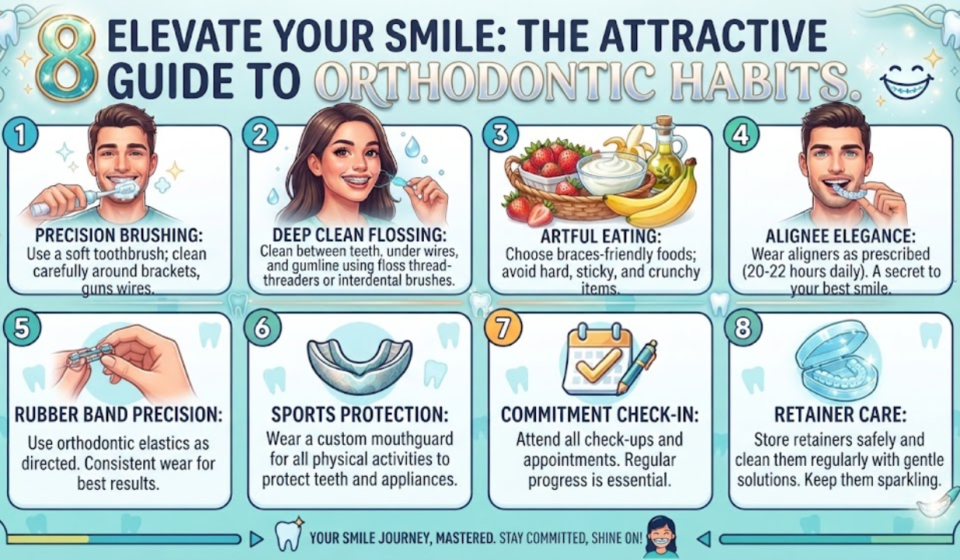
1. Brush After Every Meal, Not Just Morning and Night
Most people grow up brushing twice a day, and that’s usually fine for general oral health. But orthodontic appliances change the game completely. The additional nooks and crannies created by orthodontic appliances are exactly the kind of spaces where plaque and bacteria thrive. If you only brush in the morning and before bed, you’re giving food particles and bacteria hours to settle in around your brackets and wires.
Ideally, you should brush after every meal with toothpaste. Keep a travel toothbrush in your bag, your desk drawer, or your car. It takes two minutes, and it protects your enamel from the kind of damage that can show up the moment your braces come off.
For those with braces, using a soft-bristled toothbrush and orthodontic-friendly toothpaste is recommended to clean around brackets and wires effectively. An interdental brush, which looks like a tiny bottle brush, is also worth adding to your kit. Use your interproximal brush to reach hard-to-reach areas.
2. Make Flossing a Non-Negotiable
Flossing with braces is not the most enjoyable experience. Anyone who’s tried it knows the patience it requires to thread floss under a wire. But skipping it is one of the fastest ways to develop gum problems that slow down your entire treatment.
Flossing with braces can be tricky, but it’s essential. Use a floss threader or special orthodontic floss to reach between teeth and under wires. Flossing removes plaque and food debris that brushing alone misses.
Traditional floss can be challenging with braces, so many orthodontists recommend floss threaders or orthodontic-specific floss picks. Water flossers are another solid option. Your orthodontist may recommend additional cleaning tools, such as a water flosser, to supplement your routine. Pick whichever method you’ll actually stick to, because consistency beats perfection here.
3. Add a Fluoride Mouthwash to Your Routine
Brushing and flossing do the heavy lifting, but a fluoride rinse adds an extra layer of protection that’s easy to fit into your day. Mouthwash and fluoride treatments play a supportive role in oral health. Using a fluoride mouthwash can help strengthen enamel and protect against cavities.
This matters because cavities can form more easily due to the difficulty of thorough cleaning around brackets or attachments. A 60-second rinse at night costs almost nothing and pays off significantly over the course of a year-long treatment. Choose an antimicrobial mouthwash if you’re looking to reduce bacteria and plaque. For those with sensitive gums or teeth, consider a mouthwash that is alcohol-free, as alcohol can sometimes cause irritation.
4. Be Smart About What You Eat
You don’t have to eat boring food during orthodontic treatment, but you do need to think before you bite. Certain foods are genuinely hard on brackets, wires, and overall treatment progress, and dealing with a broken bracket means an extra appointment and potentially a longer timeline.
Dietary adjustments are often necessary for orthodontic patients to protect their appliances. Braces wearers should avoid sticky or hard foods that can damage brackets and wires. Chewing gum, caramel, and hard candies are common culprits that should be avoided.
On the flip side, eating well actively supports your treatment. Eating a balanced diet rich in fruits, vegetables, and lean proteins can support overall oral health. Foods high in calcium and vitamin D are especially beneficial for maintaining strong teeth and bones. Your teeth are literally moving through bone during orthodontic treatment, and giving your body the nutrients it needs to support that process is a genuinely smart move.
5. Build Your Morning and Nighttime Routines Around Your Braces
Having a structured routine removes the mental effort of remembering what you’re supposed to do each day. Starting the day with a structured routine is essential for orthodontic patients. Whether using braces or Invisalign, maintaining a consistent morning routine ensures optimal oral health.
Your morning routine sets the tone for the day, and your nighttime routine is where the real protective work happens. Your morning and nighttime oral care routine plays a big role in protecting your teeth during braces treatment. Plaque builds overnight, so morning brushing matters, while nighttime cleaning removes food and bacteria from the day. Create a simple routine like brushing, flossing, and rinsing.
Consistency is crucial in building habits. Set a specific time aside each day for your oral care routine, and stick to it. Regularity reinforces habit formation. If you’re serious about getting the most from your investment, think of your oral care routine the same way you think about any other daily non-negotiable.
6. Wear Your Rubber Bands (Yes, Every Day)
If your orthodontist has prescribed rubber bands, they’re part of your treatment plan for a specific reason. They apply the precise forces needed to correct bite issues that brackets and wires alone can’t fix. Skipping them, even for a day or two, can set back progress in ways that aren’t always immediately visible.
The American Association of Orthodontists emphasizes that patients are an essential partner in their own treatment process, and wearing prescribed appliances exactly as directed is the most direct way you contribute to your outcome. Orthodontists can move teeth into position, but only if you’re holding up your end of the agreement between appointments.
Keep spare rubber bands in every place you spend time regularly. Your bedroom, your bathroom, your bag, your workplace. That way, if one snaps unexpectedly, you’re never left waiting until your next appointment to replace it.
7. Protect Your Treatment During Physical Activity
If you’re active, your orthodontic appliances need some extra thought. A stray elbow in a pickup basketball game or a fall during a hike can do real damage to brackets, wires, and your teeth themselves. An orthodontic mouthguard is a simple, low-cost way to protect everything you’ve invested in your treatment.
This habit also extends to grinding your teeth at night, which is more common than most people realize. Consistent daily care can make orthodontic treatment smoother, more comfortable, and easier to manage. Small habits like brushing after meals, protecting your brackets, and attending regular appointments all help support long-term progress. Protecting your brackets from physical damage is just as important as protecting them from food debris.
Talk to your orthodontist about the right type of mouthguard for your specific appliance. Off-the-shelf versions may not fit correctly over brackets, so getting guidance before your next game or practice is worth it.
8. Stay on Top of Your Appointments and Ask Questions
Your orthodontist can only work with what they see during your appointments. Missing or rescheduling visits delays adjustments that are timed to move teeth at the right pace. Regular dental check-ups are a fundamental aspect of maintaining oral health during orthodontic treatment. These appointments are essential for overseeing the progress of your orthodontic treatment and ensuring that your overall dental health remains in good condition.
Beyond showing up, make your appointments count by actually communicating. If something feels off, if a wire is poking, if a bracket feels loose, or if you’re experiencing unusual soreness, say so. Stay informed about how systemic health issues may impact your oral health and vice versa. Communicate openly with your healthcare providers about any concerns or changes in your oral health.
If you’re exploring treatment for yourself or a family member and want expert guidance from the very first consultation, options like braces johns creek can connect you with experienced orthodontic professionals who build personalized treatment plans tailored to each patient’s specific needs. Getting the right start matters as much as maintaining good habits once treatment begins.
The McAllister Orthodontics daily care guide also points out that keeping up with both your orthodontist and your general dentist simultaneously is the most complete approach. Schedule regular dental cleanings to prevent gingivitis and maintain optimal gum health. Both providers see different aspects of your oral health, and keeping both in the loop throughout treatment is simply good practice.
Putting It All Together
Orthodontic treatment is one of the best investments you can make in your long-term health and confidence. But the results you get depend heavily on what you do during the months between your first appointment and the day your appliances come off.
None of these eight habits require a huge lifestyle overhaul. Brushing after meals, flossing daily, rinsing with fluoride, eating carefully, building consistent routines, wearing your prescribed appliances, protecting your mouth during activity, and showing up to every appointment are all small actions that compound into real results over time.
Orthodontic treatment is an investment in both your oral health and your self-confidence. By following a solid home care approach, you protect that investment, ensuring your treatment is as efficient and effective as possible. Start with one or two of these habits this week, build from there, and your future smile will reflect the consistency you put in every single day.