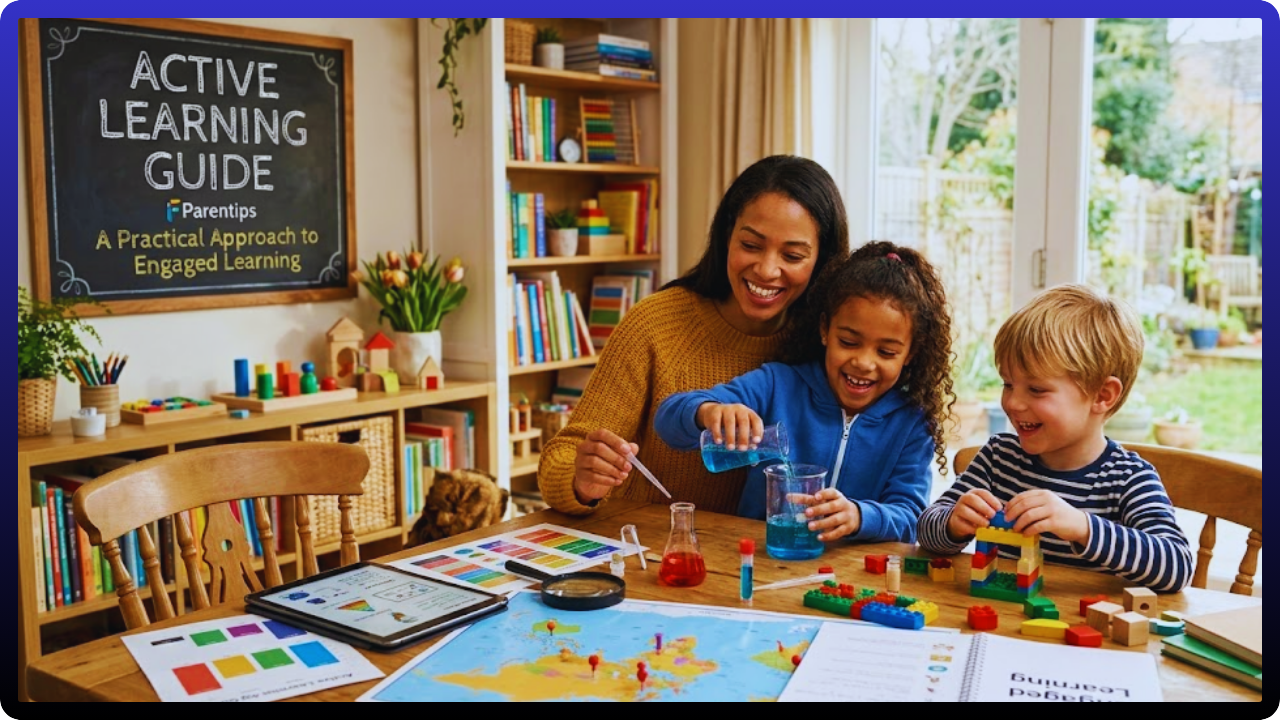

The active learning guide fparentips helps parents support their children’s education through engagement, curiosity, and meaningful interaction. Traditional learning often focuses on memorization, which may limit deep understanding. Active learning encourages children to ask questions, explore ideas, and participate in the learning process. When parents become involved in learning activities, children gain confidence and develop stronger thinking abilities. This approach transforms everyday moments into valuable educational experiences. The active learning guide fparentips promotes practical strategies that help families build a positive and supportive learning environment.
Who Is Behind the Active Learning Guide FParentips
The active learning guide fparentips represents a parenting-focused educational concept designed to guide families in supporting their children’s learning. The idea emphasizes active participation rather than passive instruction. Parents play an essential role in encouraging curiosity, creativity, and problem-solving skills. Educational specialists often highlight that children perform better academically when parents are actively involved in their learning journey. By using the ideas within the active learning guide fparentips, families can create an environment where learning becomes interactive and enjoyable. This philosophy encourages children to explore knowledge with confidence and independence.
Understanding the Concept of Active Learning
How Active Learning Improves Learning Outcomes
Active learning encourages children to participate directly in the learning process rather than simply receiving information. This approach allows children to analyze ideas, ask questions, and connect knowledge to real-life experiences. Educational studies suggest that interactive learning methods can improve knowledge retention by nearly 50 percent compared with passive study methods. The active learning guide fparentips promotes discussions and exploration that help children understand concepts more deeply. When children apply knowledge actively, they build stronger cognitive connections. As a result, learning becomes more engaging and effective.
Core Principles of the Active Learning Guide FParentips
Encouraging Curiosity and Questions
Curiosity plays a central role in helping children develop strong learning habits. When children feel comfortable asking questions, they explore ideas more deeply and build critical thinking skills. Parents who encourage curiosity create an environment where learning feels exciting and rewarding. The active learning guide fparentips emphasizes guiding children toward discovering answers rather than immediately providing solutions. This approach strengthens independent thinking and problem-solving abilities. Over time, curiosity becomes a natural motivation for continuous learning.
Benefits of the Active Learning Guide FParentips
Strengthening Knowledge Retention and Understanding
Active learning helps children process information more effectively because they interact with ideas instead of simply memorizing them. Discussions, explanations, and real-life applications make learning experiences more meaningful. Research shows that interactive learning can improve long-term understanding and memory retention significantly. The active learning guide fparentips encourages these techniques so children can develop stronger comprehension skills. When children actively explore knowledge, they remember lessons more easily. This deeper understanding supports both academic success and personal development.
Practical Strategies for Parents
Turning Daily Experiences into Learning Moments
Parents can apply the active learning guide fparentips through simple daily activities that encourage thinking and exploration. Everyday routines such as cooking, organizing tasks, or observing nature can become valuable learning experiences. These moments help children understand how academic ideas connect to real-life situations. When learning feels natural and relevant, children become more interested and motivated. Parents who involve children in discussions and practical tasks support stronger learning habits. Over time, these experiences strengthen problem-solving and analytical skills.
Creating a Positive Learning Environment at Home
Encouraging Open Communication
A supportive learning environment plays an important role in the success of the active learning guide fparentips. When children feel comfortable sharing ideas, they are more likely to participate in discussions and explore new concepts. Parents can encourage open communication by listening carefully to their children’s thoughts and opinions. This approach helps children feel respected and confident when expressing themselves. Open communication also strengthens the relationship between parents and children. As a result, learning becomes a collaborative and positive experience.
Encouraging Critical Thinking Through Active Learning
Developing Analytical Skills in Children
Critical thinking is one of the most valuable skills children can develop through active learning. The active learning guide fparentips encourages children to analyze information, compare ideas, and evaluate different solutions. Parents can support this process by asking thoughtful questions and encouraging children to explain their reasoning. When children practice analyzing situations, they learn how to make informed decisions. This skill becomes increasingly important as they face more complex academic challenges. Over time, analytical thinking supports both educational success and personal development.
Long-Term Impact of the Active Learning Guide FParentips
Building Lifelong Learning Habits
The long-term impact of the active learning guide fparentips extends beyond school performance. Children who practice active learning develop critical thinking, creativity, and adaptability. These skills help them approach challenges with confidence and curiosity. Parents who support active learning create an environment where exploration and discovery are encouraged. This positive approach helps children view learning as an ongoing and rewarding process. Lifelong learning habits begin to form when children consistently experience interactive and meaningful education.
Fostering Creativity in Everyday Learning
Encouraging creativity is an essential part of active learning. Children who experiment with ideas, projects, and problem-solving activities develop imaginative thinking that benefits both academics and personal growth. The active learning guide fparentips emphasizes integrating creative tasks into daily routines to keep learning enjoyable. When creativity is nurtured, children feel more engaged and motivated to explore new concepts. Parents can support this by offering opportunities for artistic expression and innovative thinking. Creative experiences also strengthen confidence and the ability to approach challenges from multiple perspectives.
Encouraging Emotional Intelligence Through Learning
Active learning also helps children develop emotional intelligence. The active learning guide fparentips shows that when children are encouraged to express feelings, communicate ideas, and reflect on experiences, they build empathy and self-awareness. Parents play a critical role in guiding children to understand their emotions during learning activities. Emotional intelligence supports collaboration, decision-making, and problem-solving in both school and social contexts. Learning to navigate emotions effectively contributes to well-rounded personal development. By combining academic and emotional skills, children are better prepared for future challenges.
Promoting Healthy Study Habits
The active learning guide fparentips emphasizes the importance of consistent and structured study habits. When children learn how to organize tasks, set goals, and manage time, they develop skills that support long-term academic success. Parents can guide children by creating routines that balance study and play while fostering independence. Developing these habits early ensures that learning becomes part of daily life rather than a stressful obligation. Healthy study habits also improve focus and self-discipline. Over time, children gain the confidence to manage responsibilities effectively.
Enhancing Social Skills Through Group Learning
Learning alongside peers can significantly improve social skills. The active learning guide fparentips encourages collaborative activities where children share ideas, discuss solutions, and work together on tasks. These experiences help children communicate effectively, resolve conflicts, and build teamwork skills. Parents can organize small group projects or discussions to integrate social learning into daily routines. Children who learn in collaborative environments gain confidence in expressing themselves. Social skills acquired through active learning also prepare children for future academic and professional opportunities.
Integrating Technology for Interactive Learning
Modern learning can benefit greatly from technology when used purposefully. The active learning guide fparentips highlights the use of educational apps, interactive platforms, and digital resources to enhance engagement. Parents can guide children in exploring technology in a balanced way to supplement traditional learning. Interactive digital experiences help children visualize complex concepts and apply them in practical ways. Technology can also provide instant feedback, fostering curiosity and experimentation. Using these tools thoughtfully strengthens active learning outcomes at home.
Encouraging Reflective Learning
Reflection is a key part of the active learning process. The active learning guide fparentips recommends that children think about what they learned, how they learned it, and how to apply it in different situations. Parents can ask children to share thoughts and insights after tasks or activities. Reflection reinforces understanding and builds awareness of personal learning strategies. Children become more self-directed and capable of identifying areas for improvement. Over time, reflective learning enhances both comprehension and problem-solving abilities.
Supporting Physical Activity in Learning
Physical activity can enhance cognitive development and learning engagement. The active learning guide fparentips suggests incorporating movement-based learning activities where children can explore, experiment, and apply knowledge physically. Activities like outdoor observation, sports-related problem-solving, or hands-on experiments combine movement with thinking. This approach keeps children energized, focused, and motivated. Parents who integrate physical activity into learning create a stimulating environment for both mind and body. Physical engagement also strengthens memory retention and creativity.
Encouraging Curiosity Outside the Classroom
Learning is not limited to schoolwork or home assignments. The active learning guide fparentips emphasizes exploring curiosity in everyday life. Visiting museums, exploring nature, or even observing community activities can spark curiosity and enhance understanding. Parents who guide children to ask questions about the world help develop a lifelong love for learning. These experiences connect academic knowledge with real-life observations. Children learn to see opportunities for learning in every environment. Curiosity outside the classroom reinforces the principles of active learning consistently.
Encouraging Problem-Solving in Daily Life
Active learning emphasizes real-world problem-solving. The active learning guide fparentips encourages children to approach daily challenges with critical thinking. Parents can guide children through scenarios that require planning, evaluating options, and making decisions. These exercises strengthen both analytical and creative thinking skills. Problem-solving in daily contexts helps children develop confidence and independence. Over time, children learn to tackle increasingly complex problems with resilience and creativity.
Supporting Multisensory Learning Experiences
The active learning guide fparentips highlights the benefits of engaging multiple senses in learning. Hands-on experiments, visual aids, and interactive activities help children understand concepts more effectively. Parents who incorporate multisensory approaches provide opportunities for children to learn in ways that suit different learning styles. This method improves memory retention and strengthens comprehension. Multisensory learning also makes education more enjoyable and immersive. Children develop both cognitive and practical skills simultaneously.
FAQs
What is the active learning guide fparentips
The active learning guide fparentips is a parenting-focused approach that helps families encourage interactive learning and critical thinking in children.
How does active learning help children learn better
Active learning helps children understand concepts more deeply by encouraging participation, discussion, and practical application.
Can parents apply active learning strategies at home
Yes, parents can easily apply active learning through conversations, daily activities, and encouraging curiosity in children.
Why is active participation important in learning
Active participation helps children remember information longer and develop stronger problem-solving and thinking skills.
Is the active learning guide fparentips suitable for all ages
Yes, the principles of the active learning guide fparentips can be adapted for children of different age groups.
- You May Like this:Save Big with MyWirelessCoupons Garden Top Tips Strategies
Final Thoughts
The active learning guide fparentips provides a valuable framework for parents who want to help their children become confident and independent learners. By encouraging curiosity, discussion, and real-world experiences, parents can create a learning environment that inspires exploration and creativity. This approach supports deeper understanding and helps children develop strong problem-solving skills. Over time, active learning strengthens both academic performance and personal growth. Parents who consistently apply these principles help their children build habits that support lifelong learning. The active learning guide fparentips ultimately demonstrates how simple daily interactions can shape a child’s educational success.