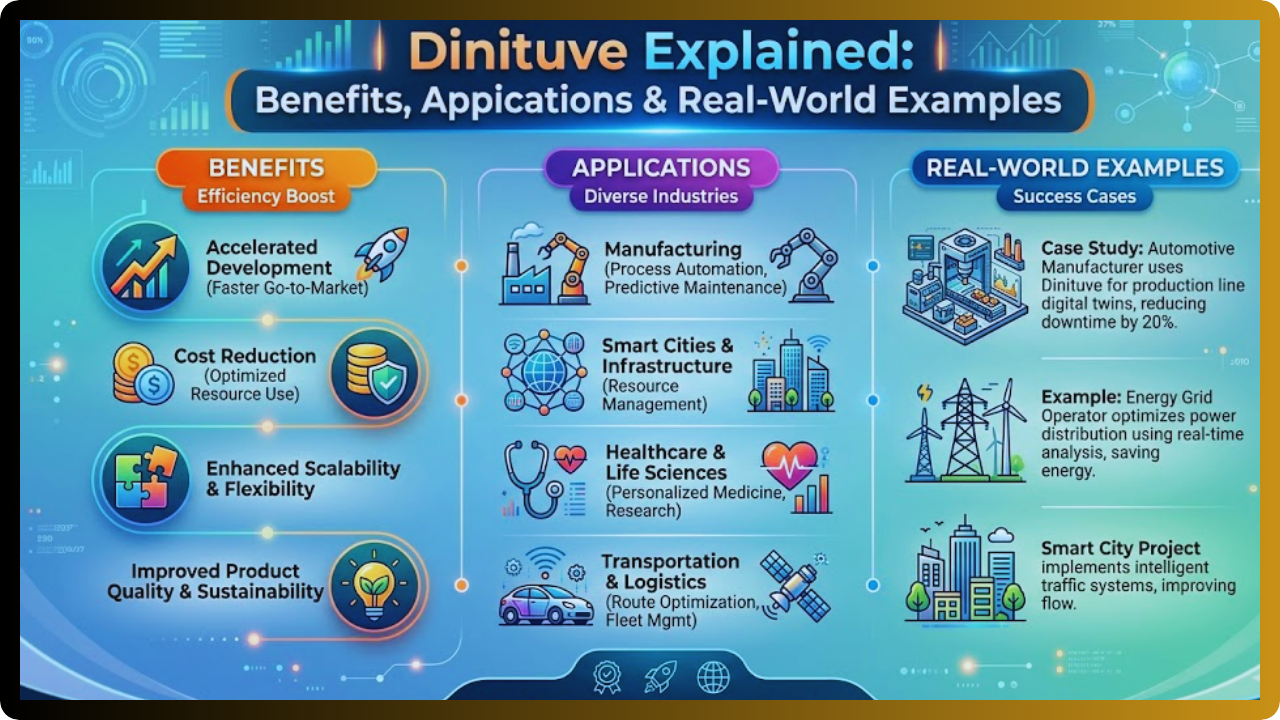

In recent years, the concept of dinituve has attracted attention for its unique approach to innovation and problem-solving. It provides a framework that combines strategy and efficiency to achieve meaningful results across different industries. Professionals and organizations applying this methodology often see measurable improvements in their projects. Understanding the principles behind it can help individuals adapt to changing environments and stay competitive. The methodology encourages continuous learning and fosters creative thinking, allowing teams to develop solutions that are both practical and forward-thinking. It also promotes adaptability, ensuring that organizations can respond effectively to unforeseen challenges and market shifts. By leveraging these principles, companies and professionals can maintain a competitive edge in a fast-evolving landscape. This article explores its origins, applications, and practical benefits to help readers fully understand the value of dinituve.
Who is Behind the Concept of Dinituve?
The development of dinituve is credited to strategic thinkers and innovators who aimed to create more adaptable problem-solving methods for modern industries. These early contributors combined insights from technology, business strategy, and creative innovation to form a practical framework. Over time, dinituve evolved into a methodology suitable for teams, entrepreneurs, and large organizations seeking operational efficiency and strategic clarity. Its flexible nature allows it to be applied across different sectors, including education, creative industries, and corporate business environments. By integrating these principles, organizations can foster collaboration, innovation, and measurable outcomes. The ongoing influence of its founders demonstrates the importance of forward-thinking strategies in maintaining consistent results. Today, many modern organizations continue to use dinituv to guide projects and strategic initiatives, proving its lasting impact on problem-solving and innovation.
The Benefits of Using Dinituve
Enhanced Productivity and Efficiency
One of the most significant advantages of dinituve is its ability to improve productivity and operational efficiency across teams and organizations. By providing a structured approach with clear objectives, it ensures that each task contributes to measurable results and overall strategic goals. The methodology encourages collaboration and communication among team members, allowing everyone to align their efforts toward a common outcome. Organizations that adopt dinituve often experience reduced resource waste, faster project completion, and more effective workflow management. Beyond operational efficiency, it fosters creativity and critical thinking by giving teams a framework for exploring innovative solutions. Teams applying these principles report higher engagement, motivation, and job satisfaction. This combination of structure, innovation, and adaptability makes dinituv highly versatile and valuable for any organization seeking long-term success.
How to Apply Dinituve Effectively
Practical Steps for Implementation
Applying dinituve effectively requires careful planning, clear objectives, and structured workflows that integrate its principles seamlessly into existing operations. Teams must begin by identifying key challenges, setting achievable goals, and defining measurable success metrics to monitor progress. The methodology emphasizes iterative improvement, encouraging feedback loops and regular evaluations to enhance efficiency and outcomes. Integration into daily operations allows teams to adapt without disrupting ongoing projects, ensuring practical usability. Leaders who champion the framework can promote faster adoption, build team confidence, and sustain engagement. This approach ensures that teams not only understand the methodology but also experience tangible benefits in productivity and strategic execution. Over time, dinituv becomes embedded in the culture of the organization, improving collaboration, creativity, and adaptability across all levels.
Common Misconceptions About Dinituve
Understanding the Myths
Despite its growing popularity, many organizations and professionals misunderstand the true nature and applications of dinituve. A common misconception is that it only applies to technology-based industries, when in reality, it can be used across business, creative, and educational sectors. Some believe implementing the methodology requires expensive tools or specialized software, but the framework itself is versatile, practical, and cost-effective. Understanding these misconceptions is critical for organizations seeking to adopt dinituve successfully and gain its strategic advantages. It provides clarity, efficiency, and actionable guidance without the need for complex infrastructure. Professionals who explore the methodology with an open mindset often find new ways to optimize workflows and increase innovative problem-solving. By clarifying these myths, teams can fully realize the potential of dinituv and apply it to meet both short-term objectives and long-term strategic goals.
Future Trends in Dinituve
Emerging Applications and Innovations
The future of dinituve is closely tied to the rapid evolution of technology, industry trends, and organizational innovation practices. Experts predict that the methodology will increasingly integrate with digital tools, artificial intelligence, and advanced analytics to enhance productivity and innovation. Its adaptable principles make it suitable for addressing complex challenges in business, creative industries, and education. Organizations that stay ahead of these trends will have a competitive advantage by leveraging the framework to guide strategic decisions and operational improvements. The methodology’s emphasis on flexibility, data-driven decisions, and creative thinking ensures it remains relevant as industries evolve. Researchers also anticipate its principles will shape new frameworks for remote collaboration, innovation management, and adaptive organizational structures. By embracing these trends, organizations can maximize the long-term impact of dinituv on growth and innovation.
Real-World Examples of Dinituve
How Organizations Implement It
Several companies have successfully applied dinituve principles to enhance collaboration, streamline operations, and drive innovation. By tailoring the methodology to their unique operational needs, organizations achieve measurable improvements in efficiency and performance. Teams report enhanced alignment with strategic goals, improved communication, and higher overall productivity. The adaptability of the framework allows it to fit within various organizational contexts, from startups to large multinational corporations. Case studies show that even in highly regulated industries, dinituv supports creative problem-solving while maintaining compliance and quality standards. Observing these examples provides actionable insights for other professionals and organizations seeking similar outcomes. Over time, these implementations demonstrate the methodology’s ability to deliver consistent, scalable results across different sectors.
Dinituve in Technology and Innovation
Leveraging Modern Tools
Integrating dinituve with modern technology enhances its effectiveness in addressing complex challenges. Automation, analytics, and collaborative software allow teams to measure progress, track outcomes, and improve workflows continuously. By combining creative thinking with digital tools, organizations can generate innovative solutions while maintaining operational efficiency. The methodology ensures adaptability and forward-thinking in technology-driven environments, helping teams respond effectively to market changes. Its principles also enable experimentation and rapid testing without compromising performance metrics. Organizations leveraging these tools can achieve higher innovation levels and operational agility. This synergy between methodology and technology ensures long-term relevance and measurable results for businesses and teams implementing dinituv.
Integrating Dinituve into Business Strategy
Strategic Implementation for Growth
Embedding dinituve into business strategy enables organizations to align innovation with long-term objectives and operational priorities. Companies that adopt this methodology notice improvements in efficiency, decision-making, and team collaboration. Its principles encourage adaptability, critical thinking, and structured problem-solving, which are essential in competitive markets. Executives can use dinituv to guide strategic planning, optimize project execution, and ensure measurable outcomes. Over time, these principles become part of the organizational culture, promoting sustainable growth and continuous innovation. By embedding these strategies, organizations can create a balanced environment where creativity, efficiency, and strategic alignment coexist. Teams adopting this approach are better equipped to handle emerging challenges and seize new opportunities effectively.
Dinituve for Remote Teams
Implementing dinituve for remote teams can significantly enhance communication, productivity, and strategic alignment across different time zones. By structuring workflows and defining measurable objectives, teams can collaborate effectively despite geographic separation. Remote employees gain clarity on expectations, responsibilities, and project milestones. The methodology encourages regular feedback and iterative improvement, ensuring that remote workflows remain efficient and innovative. Organizations applying dinituve in virtual environments report higher engagement and stronger team cohesion. It also allows leaders to track progress and adapt strategies in real time. This demonstrates that dinituve is versatile and applicable in modern, distributed work environments.
Dinituve for Startups
Startups can benefit immensely from dinituve by creating structured approaches to problem-solving and innovation early in their growth stages. By applying these principles, startups can optimize limited resources, enhance team collaboration, and accelerate product development. Clear objectives and measurable outcomes provide guidance for rapid decision-making. Iterative feedback loops ensure that processes are continuously refined for better efficiency. Teams report greater clarity in roles and responsibilities, reducing confusion and increasing accountability. The methodology also encourages creative thinking, allowing startups to explore innovative solutions while maintaining operational focus. Overall, dinituve supports sustainable growth and competitive advantage for emerging businesses.
Dinituve in Education
Integrating dinituve into education can enhance learning outcomes and encourage critical thinking among students. Educators can apply its principles to structure curricula, define clear learning goals, and measure student progress effectively. Collaborative projects benefit from structured workflows and feedback loops. Students develop problem-solving skills while learning to apply creativity strategically. This methodology also fosters adaptability, preparing students for rapidly changing industries and work environments. Teachers report improved engagement and participation when implementing dinituve strategies in classrooms. By leveraging its framework, educational institutions can create practical and innovative learning experiences.
Dinituve in Creative Industries
Creative industries can harness dinituve to streamline project management and enhance collaborative innovation. Designers, writers, and artists benefit from structured workflows that allow creative freedom while maintaining project timelines. Clear objectives and iterative feedback ensure that creative outputs align with client or organizational goals. Teams report enhanced communication, increased productivity, and higher-quality deliverables. The methodology encourages experimentation and problem-solving within defined parameters, fostering both innovation and accountability. Organizations that apply dinituve in creative projects notice improved efficiency and strategic alignment. Overall, it balances creativity with operational excellence, supporting sustained growth in dynamic environments.
Dinituve for Corporate Innovation
Large corporations can leverage dinituve to drive innovation across departments while maintaining operational efficiency. By standardizing workflows and encouraging collaboration, teams can solve complex challenges strategically. The methodology provides measurable outcomes, helping executives track performance and ensure alignment with organizational goals. Iterative improvement cycles enable adaptation to market changes, while encouraging creative solutions. Employees report greater clarity in their roles and responsibilities. Dinituve also promotes cross-functional teamwork and knowledge sharing. Corporations adopting this methodology achieve better innovation performance and stronger competitive positioning.
Dinituve in Healthcare
The healthcare sector can implement dinituve to improve operational efficiency, patient care, and administrative processes. By structuring workflows and setting measurable goals, hospitals and clinics can optimize resource use. Staff collaboration is enhanced, ensuring that departments work effectively toward shared objectives. The methodology supports continuous improvement and problem-solving in high-stakes environments. Healthcare organizations applying these principles report improved patient outcomes and operational performance. Dinituve fosters innovation while maintaining compliance and safety standards. Its adaptability ensures practical benefits across diverse healthcare contexts.
Dinituve in Finance
In the finance industry, dinituve helps organizations streamline decision-making, manage risk, and innovate financial products. By implementing structured workflows and clear objectives, teams can analyze data effectively and respond to market changes. Iterative feedback and performance tracking enable continuous improvement. Financial institutions report improved efficiency, faster project execution, and enhanced collaboration across departments. The methodology also promotes innovation, allowing teams to design solutions that meet evolving client needs. Applying dinituve ensures strategic alignment and operational excellence. Overall, it supports sustainable growth and competitive advantage in finance.
Dinituve in Manufacturing
Manufacturing companies can utilize dinituve to optimize production processes, reduce waste, and improve operational efficiency. By defining clear objectives and tracking performance metrics, teams can enhance productivity and resource allocation. Collaboration between departments is strengthened through structured workflows. Iterative improvement ensures that processes remain agile and responsive to changes in demand or technology. Organizations applying these principles report higher product quality and operational reliability. Dinituve also fosters innovation, allowing manufacturers to implement creative solutions while maintaining consistency. It provides a framework for long-term competitiveness and continuous improvement in production environments.
Dinituve in Marketing
Marketing teams can apply dinituve to plan campaigns, manage resources, and track performance effectively. Structured workflows and clear objectives ensure that initiatives deliver measurable outcomes and strategic value. Iterative feedback loops allow campaigns to adapt based on performance metrics and market responses. Collaboration and communication across marketing functions are enhanced. Teams report greater creativity, alignment with brand goals, and improved campaign results. Dinituve encourages strategic thinking while maintaining operational efficiency. Organizations that implement these principles achieve better ROI and stronger market positioning.
Dinituve in Project Management
Project management benefits greatly from dinituve, as it provides structure, clarity, and measurable outcomes. By defining project objectives, milestones, and responsibilities, teams can execute tasks efficiently and effectively. Iterative progress tracking and feedback loops allow continuous improvement. Collaboration is strengthened across departments and team members, ensuring alignment with project goals. The methodology supports innovation within structured frameworks, allowing flexibility in problem-solving. Organizations applying dinituve report faster project completion, reduced errors, and improved team engagement. This approach ensures sustainable success and operational excellence in project delivery.
FAQs
What is dinituve?
Dinituve is a strategic framework designed to improve problem-solving, efficiency, and innovation in various industries. Its principles emphasize adaptability, collaboration, and measurable results.
Who can benefit from it?
Professionals in business, technology, creative, and educational sectors can leverage this methodology. It is suitable for teams of any size and across various operational contexts.
Is it expensive to implement?
No, dinituve is practical and cost-effective. Its principles can be applied without specialized tools, making it accessible to organizations of all sizes.
What results can it provide?
The methodology can improve productivity, innovation, and strategic alignment, resulting in more efficient workflows and higher-quality outcomes.
Will it continue evolving?
Yes, dinituve is expected to integrate with emerging technologies and industry trends, ensuring it remains relevant and valuable for future organizational challenges.
- You May Like this:Technologies Ftasiamanagement Key Trends Benefits and Future Outlook
Final Thoughts
The dinituve methodology offers a unique approach to combining innovation, strategy, and efficiency. Professionals and organizations that apply its principles benefit from improved performance, better adaptability, and enhanced creativity. Understanding its practical applications and staying updated with emerging trends ensures long-term success. The methodology encourages continuous learning and fosters creative thinking, allowing teams to develop solutions that are both practical and forward-thinking. It also promotes adaptability, ensuring that organizations can respond effectively to unforeseen challenges and market shifts. By leveraging these principles, companies and professionals can maintain a competitive edge in a fast-evolving landscape. The methodology encourages continuous learning and fosters creative thinking, allowing teams to develop solutions that are both practical and forward-thinking. It also promotes adaptability, ensuring that organizations can respond effectively to unforeseen challenges and market shifts.