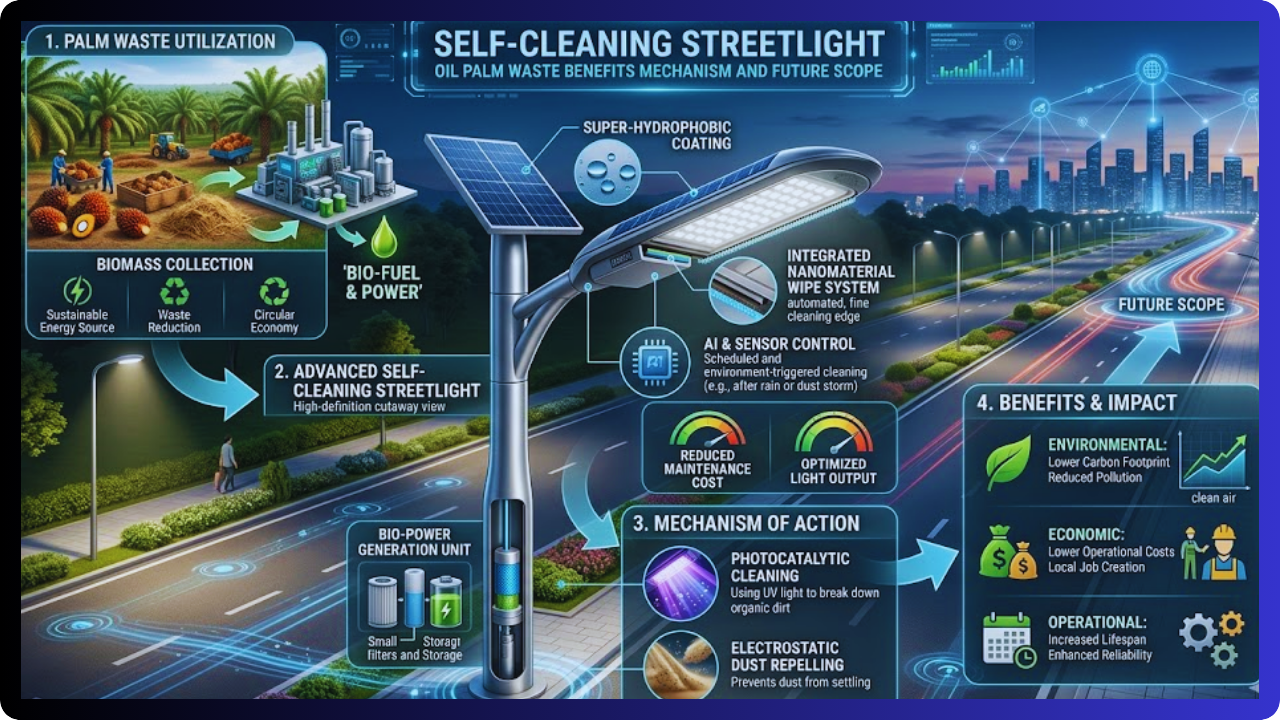
The concept of a self cleaning streetlight oil palm waste system is gaining attention as cities look for smarter and greener solutions. Rapid urban growth has increased the demand for efficient lighting systems that require minimal maintenance. This innovative approach combines automated cleaning technology with renewable resources derived from oil palm waste. It ensures streetlights remain clean and operate at maximum efficiency without frequent human involvement. By reducing operational costs and environmental impact, it supports modern sustainability goals. This technology is becoming a key part of future-ready infrastructure. It also contributes to smarter energy management in urban planning. As adoption grows, it can significantly improve long-term infrastructure efficiency and supports global renewable energy initiatives. Moreover, it demonstrates how cities can balance urban expansion with environmental responsibility.
Who Is Self Cleaning Streetlight Oil Palm Waste
A self cleaning streetlight oil palm waste system refers to an advanced lighting solution designed for automated performance and sustainability. It represents a concept rather than a person, combining smart cleaning mechanisms with eco-friendly materials. The system uses built-in features to remove dust and debris from solar panels or lighting surfaces. At the same time, oil palm waste is utilized to support energy production or structural design. This integration makes the technology highly efficient and environmentally responsible. It is widely considered a modern solution for smart cities and green infrastructure. It also supports the global shift toward renewable energy adoption. Moreover, it can be implemented in both urban and rural environments, offering flexible solutions for diverse lighting needs. It highlights how agricultural waste can be transformed into valuable energy and structural materials, promoting circular economy principles.
Working Mechanism of Self Cleaning Streetlight Oil Palm Waste
Automated Cleaning and Energy Integration
The working process of a self cleaning streetlight oil palm waste system relies on smart sensors and mechanical cleaning tools. Sensors detect dust accumulation and activate cleaning components such as brushes or air systems. This ensures solar panels remain clean and efficient at all times. Minimal water may be used for cleaning to avoid waste. Additionally, oil palm waste can be converted into biomass energy to support power supply. This combination of automation and renewable energy enhances system reliability. It reduces maintenance efforts while improving energy output significantly. Performance remains consistent across various weather conditions. Programming can optimize cleaning schedules, further boosting efficiency. Smart integration ensures long-term energy stability and minimal environmental impact.
Role of Oil Palm Waste in Sustainable Design
Eco-Friendly Materials and Energy Source
Oil palm waste plays a vital role in making the self cleaning streetlight oil palm waste system sustainable. Agricultural by-products such as palm fibers and shells can be reused innovatively. These materials can be converted into biofuel for alternative energy or used to manufacture durable, biodegradable components. This reduces reliance on non-renewable resources and lowers environmental impact. Using waste materials supports a circular economy approach. It transforms unused resources into valuable solutions for modern infrastructure. It also helps manage agricultural waste disposal. Overall, it encourages sustainable industrial practices and resource efficiency. By integrating waste into urban infrastructure, it demonstrates practical sustainability that can inspire other sectors.
Benefits and Applications in Modern Infrastructure
Efficiency and Smart City Integration
The self cleaning streetlight oil palm waste system provides advantages in urban and rural settings. It reduces maintenance costs by eliminating frequent manual cleaning. Clean solar panels ensure higher energy efficiency and consistent lighting performance. Renewable materials help lower carbon emissions and support environmental conservation. In smart cities, integration with digital monitoring allows real-time performance tracking and operational control. In rural areas, reliable lighting is possible without complex electrical networks. Widespread adoption could lead to substantial energy savings and reduced carbon footprints. This system also enhances public safety and community satisfaction. Over time, municipalities can reduce operational stress and improve budget allocation. It also provides a model for sustainable, low-cost urban development.
Environmental Impact and Future Potential
Sustainability and Innovation Growth
The environmental impact of the self cleaning streetlight oil palm waste system is highly positive. Using agricultural waste reduces landfill burden and promotes resource efficiency. Solar-powered systems reduce energy consumption by 60–70 percent, and combining them with biomass energy increases sustainability benefits. Future developments may include AI-based cleaning systems and improved materials from palm waste. These innovations enhance efficiency and reduce costs further. This technology has the potential to become a global standard in sustainable lighting solutions. It aligns with climate action goals and urban sustainability initiatives. Additionally, it reduces reliance on fossil fuels and minimizes ecological degradation. Communities adopting this system enjoy cleaner urban environments and energy-efficient infrastructure.
Cost Efficiency and Long-Term Savings
Reduced Maintenance and Operational Costs
The self cleaning streetlight oil palm waste system is cost-effective due to automation. Built-in cleaning eliminates frequent manual maintenance, reducing labor costs and downtime. Clean solar panels generate maximum energy, lowering electricity expenses. Oil palm waste use reduces material costs. Long-term, this leads to substantial savings for municipalities and organizations. The system also improves return on investment for urban projects. It allows cities to allocate funds to other services while maintaining efficient lighting. Predictable maintenance schedules further enhance economic efficiency. This makes it highly attractive for large-scale municipal deployments. Reduced operational complexity ensures long-term reliability and fiscal benefits.
Challenges and Implementation Considerations
Technical and Environmental Factors
Despite advantages, the self cleaning streetlight oil palm waste system faces challenges. Initial setup costs are higher than traditional streetlights. Availability of oil palm waste varies regionally. Technical expertise is required for installing sensors and automated systems. Environmental factors such as heavy rain or dust may affect performance. However, planning, monitoring, and standardized maintenance can overcome these challenges. Policy support and training programs further ensure successful implementation. Remote locations may require additional energy storage solutions. Awareness campaigns can enhance public acceptance. Ongoing innovation will help reduce setup costs and complexity, making adoption easier globally.
Future Scope in Smart Infrastructure Development
Innovation and Global Adoption
The self cleaning streetlight oil palm waste system has strong potential for global adoption. Governments investing in green technologies aim to reduce environmental impact. AI integration can optimize cleaning and energy efficiency. Advanced materials from palm waste improve durability. Applications may expand beyond street lighting into other smart infrastructure. Awareness and adoption rates are expected to rise rapidly. This technology can shape sustainable cities globally. Its flexibility allows integration with other urban utilities like traffic monitoring and emergency lighting. Partnerships between governments and private sectors are expected to accelerate innovation. Future upgrades may include AI-driven predictive maintenance and energy management. These developments will make urban infrastructure smarter, greener, and more efficient. It is a practical solution for cities seeking climate-smart growth.
Economic Advantages for Municipalities
The self cleaning streetlight oil palm waste system provides municipalities with long-term economic benefits. Reduced maintenance decreases operational expenses and increases solar panel lifespan. Lower energy costs allow municipalities to redirect funds to urban projects. It supports smart budgeting and efficient resource allocation. Local employment opportunities may increase through maintenance and installation. The system reduces dependency on external service providers and minimizes unexpected repair costs. Over time, predictable budgeting and savings reinforce its value. Additional benefits include reduced costs related to waste disposal and energy consumption. Municipalities can reinvest savings into other community projects. This system provides a model for cost-effective, sustainable urban development.
Energy Optimization and Performance Reliability
Using a self cleaning streetlight oil palm waste system ensures maximum energy output. Automated cleaning prevents dust accumulation, which can reduce solar efficiency by up to 30%. Biomass energy derived from palm waste provides backup power. This combination ensures reliable lighting even during low sunlight periods. Energy usage can be monitored in real time for optimization. The system supports continuous operation in emergencies or remote locations, improving public safety. It also reduces dependency on the main power grid, enhancing energy security. Automated reporting tools allow municipalities to track energy efficiency and adjust usage. The system minimizes energy waste and contributes to lower operational costs. Overall, it provides a highly reliable and efficient urban lighting solution.
Integration with Smart City Technologies
The self cleaning streetlight oil palm waste system integrates with smart city infrastructure. IoT sensors monitor energy consumption, operational status, and cleaning performance. Real-time data allows optimization of lighting schedules and energy use. Predictive maintenance reduces downtime and costs. These streetlights provide a practical model for combining sustainability with digital innovation. Automated alerts improve responsiveness and urban management. Integration enables remote monitoring and control, reducing manual intervention. Data analytics support long-term planning and resource allocation. It also enhances citizen safety by maintaining consistent lighting. The system contributes to a connected urban ecosystem with real-time intelligence.
Contribution to Circular Economy
The self cleaning streetlight oil palm waste system embodies circular economy principles. Agricultural by-products are turned into energy or materials. Landfill pressure is reduced, and sustainable practices encouraged. Communities benefit from cost-effective resource reuse. Industries gain access to low-cost raw materials. This approach demonstrates how eco-friendly solutions can be scalable and practical. It also fosters innovation in waste-to-energy applications beyond streetlights. The system promotes sustainable urban growth by utilizing local resources. It encourages industries to rethink manufacturing processes with sustainability in mind. By reducing waste and maximizing resource efficiency, it strengthens local economies. Circular principles applied here inspire similar green solutions in other sectors.
Reduction of Carbon Footprint
Implementing self cleaning streetlight oil palm waste systems lowers carbon emissions. Solar power and biomass reduce reliance on fossil fuels. Automated cleaning maintains efficiency. Cities can meet sustainability targets more effectively. Air quality and public health are improved. This demonstrates practical urban sustainability and environmental stewardship. Carbon reduction also helps cities comply with international climate agreements. Long-term use can lead to measurable decreases in greenhouse gas emissions. It positions municipalities as leaders in environmental responsibility. Additionally, it educates communities on renewable energy adoption and sustainability practices.
Adaptability Across Various Climates
The self cleaning streetlight oil palm waste system performs efficiently in diverse conditions. Extreme heat, heavy rainfall, and high dust environments are managed effectively. Biomass energy backup ensures consistent operation. It is suitable for tropical and temperate regions. Resilience guarantees reliable lighting in challenging environments. The system is designed to endure seasonal weather variations without losing efficiency. It can be deployed in areas with irregular sunlight while maintaining functionality. Its robust construction ensures longevity even under harsh environmental conditions. This adaptability makes it suitable for global deployment. It allows municipalities to standardize infrastructure while addressing local climate challenges.
Support for Rural Electrification
These streetlights benefit rural areas lacking reliable electricity. Self cleaning streetlight oil palm waste systems reduce maintenance and can operate independently of the grid. Continuous energy from solar and biomass improves safety and productivity. They encourage green technology adoption in rural development. The system supports local communities by improving visibility for schools, healthcare centers, and streets. It reduces reliance on expensive or unreliable power infrastructure. The technology also promotes renewable energy awareness in rural populations. By providing sustainable and autonomous lighting, it bridges the urban-rural energy gap. This enables economic growth and social development in remote areas. Rural electrification initiatives become more feasible and cost-effective with these systems.
Long-Term Durability and Maintenance Reduction
The self cleaning streetlight oil palm waste system offers superior durability. Renewable materials and advanced automation reduce wear and tear. Lifespan increases and replacement costs are lower. Automation minimizes human errors and enhances safety. Consistent performance ensures cost-effectiveness over time. Its robust design withstands environmental stress, ensuring reliable operation. Maintenance requirements are minimal, lowering long-term costs. Replacement cycles are extended due to high-quality, sustainable components. Municipalities benefit from predictable infrastructure planning. This durability makes it ideal for large-scale urban and rural projects. It also ensures uninterrupted lighting for years with minimal intervention.
Global Adoption Trends
Adoption of self cleaning streetlight oil palm waste systems is increasing worldwide. Smart city projects are integrating them into urban planning. Environmental awareness drives renewable infrastructure investment. Standardized designs improve efficiency and reliability. Global adoption positions this system as a benchmark for sustainable public lighting. The technology is gaining traction in both developing and developed countries. International collaborations are promoting knowledge exchange and best practices. Reduced costs over time encourage wider municipal adoption. It showcases renewable energy as a viable mainstream solution. This global trend reflects the rising demand for smart, eco-friendly urban infrastructure.
FAQs
What is a self cleaning streetlight oil palm waste system?
A smart streetlight that automatically cleans itself while using oil palm waste for energy or components.
How does the cleaning system work?
It uses sensors and automated tools to remove dust and maintain efficiency.
Why is oil palm waste used?
It is a renewable resource converted into energy or eco-friendly components.
Is it suitable for rural areas?
Yes, due to low maintenance and independent energy generation.
What are the environmental benefits?
It reduces waste, lowers carbon emissions, and promotes renewable energy use.
- You May Like this:Dinituve Explained Benefits Applications and Real-World Examples
Final Thoughts
The self cleaning streetlight oil palm waste system represents a major step forward in sustainable infrastructure development. It combines smart automation with eco-friendly materials to create an efficient and reliable lighting solution. By addressing maintenance challenges and environmental concerns, it offers long-term benefits for both cities and rural communities. This innovation highlights the potential of using agricultural waste in modern technology. As advancements continue, it is expected to play a key role in building smarter and greener environments. It also contributes to smarter energy management in urban planning. As adoption grows, it can significantly improve long-term infrastructure efficiency. Furthermore, it sets a benchmark for future eco-friendly urban technologies