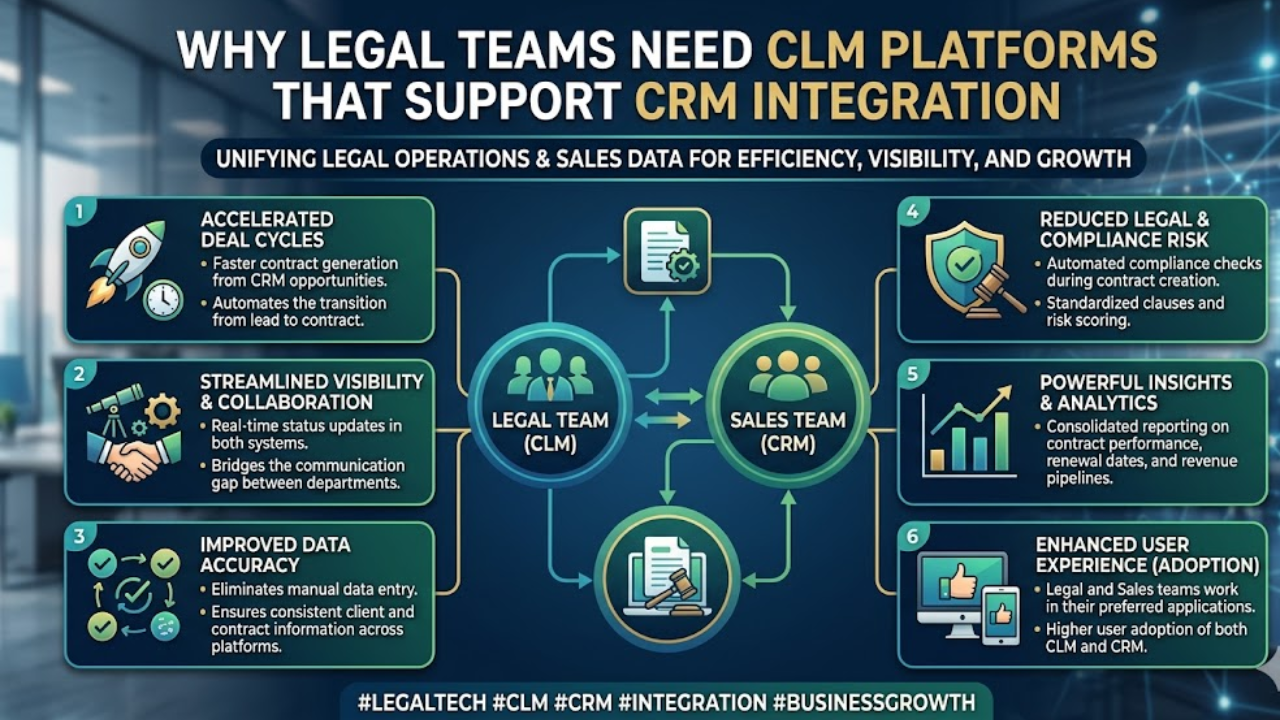
A contract lifecycle management platform does more than store agreements. It tracks obligations, deadlines, and renewal dates for any business. Many legal teams struggle to connect their contracts with real customer data.
This gap creates duplicate work and missed opportunities. A direct link between CLM platforms and customer relationship management solves that problem. Here is why integration between these two tools matters for legal departments.
Contracts Lose Value Without Live Customer Data
A signed contract contains critical terms about pricing, deliverables, and termination rights. But those terms become static text once the document leaves the legal team’s view. Customer relationship management systems hold live information about account health, payment history, and negotiation notes. When CLM platforms ignore CRM data, legal teams review contracts without full context. For instance, a renewal notice might arrive while the customer has unresolved support tickets. Integration pulls those customer signals directly into the contract review process. Legal professionals can then flag risks early.
Manual Data Entry Invites Costly Errors
Legal staff spends hours copying customer names, contract dates, and billing terms from CRM entries into CLM fields. Each manual transfer introduces a chance for typos or mismatched records. A wrong expiration date or a misspelled party name can delay a signature or trigger a legal dispute. Integration eliminates this double work entirely. Once a sales team closes a deal in the CRM, that contract data flows automatically into the CLM. The legal team then works from accurate, current information. This change saves time and prevents human error.
Renewals Become Smarter with Shared Information
Contract renewals depend on more than a calendar alert. Legal teams need to know whether a customer has paid on time or requested major changes to services. Without CRM integration, they search separate systems for this history. With integration, the CLM pulls usage metrics and support logs directly from the CRM. A customer with low product engagement may not want a price increase at renewal. Legal can then recommend shorter terms or different pricing. This shared view turns renewals from routine tasks into strategic decisions.
Negotiation Speed Improves for Everyone
Sales representatives want quick contract changes to close deals. Customers expect fast answers about liability terms or payment schedules. But legal teams slow down when they lack recent customer data. Integration gives legal professionals a dashboard that shows the customer’s value tier, past concessions, and compliance record. A high-value customer with a clean audit history can receive faster approval on nonstandard clauses. A risky customer with late payments gets extra scrutiny. This efficiency does not sacrifice quality. It uses real data to prioritize work correctly.
Audit Trails and Compliance Become Reliable
Regulators and internal auditors ask for proof of contract approvals and customer due diligence. Separate CLM and CRM systems create fragmented records. An auditor might see the final contract in the CLM but miss pre-signature emails from the CRM. Integration builds a single timeline from first customer contact to final signature and renewal. Legal teams produce complete audit packages without manual file assembly. This reliability reduces legal risk during investigations. It also strengthens the company’s defense in any contract dispute.
Legal teams no longer work in isolation from sales and customer success. A CLM platform without CRM integration forces contract work into a bubble. That bubble misses payment data, support history, and customer sentiment. Integration closes the loop between what a contract says and how a customer behaves. Legal reviews become faster, more accurate, and more helpful to business goals. The result is a legal team that prevents problems instead of just reacting to them.