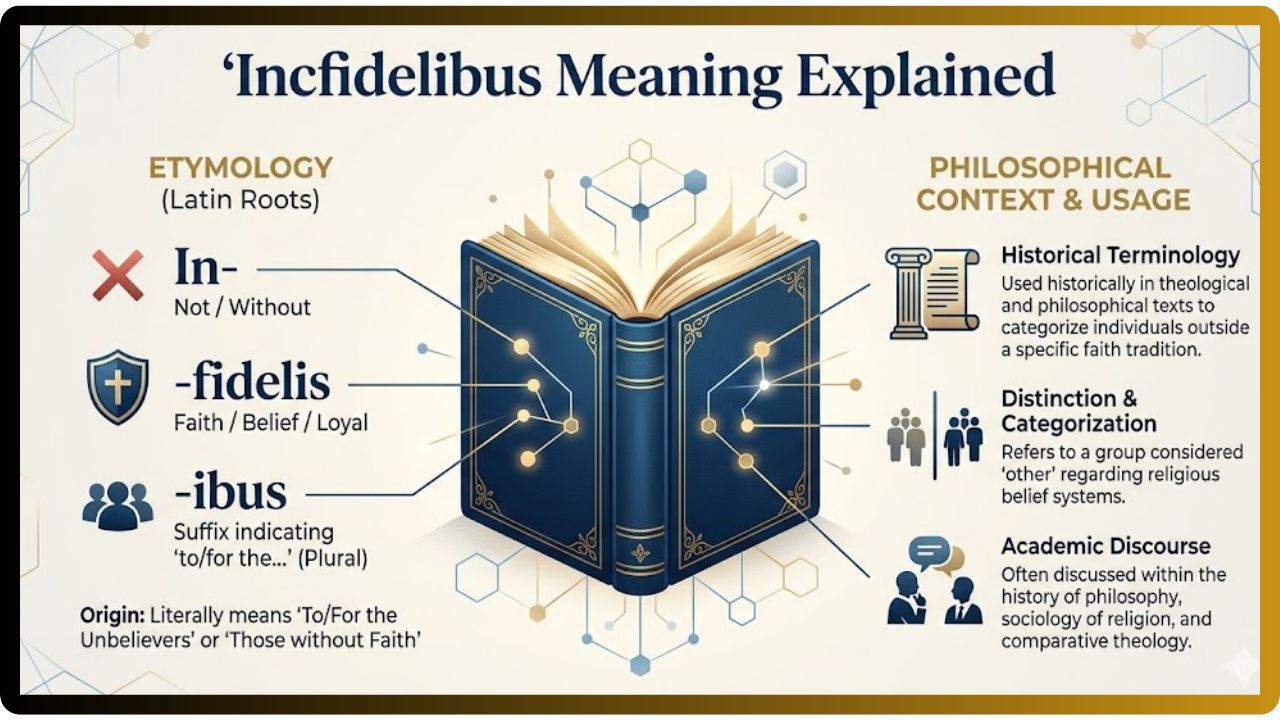

The term incfidelibus is a rare expression rooted in Latin language tradition and historical linguistic study. It is not commonly used in everyday communication, but it appears in academic writing, philosophy discussions, and language analysis. The idea behind incfidelibus is often connected with belief, identity, and how societies classify human thought. Over time, it has been interpreted as a conceptual word rather than a practical one. Many scholars use it to understand how older languages shaped modern thinking and communication. It also helps explain how meanings shift as cultures evolve. In simple terms, incfidelibus represents an idea more than a direct definition. It is often examined in relation to historical language systems and philosophical interpretation. Researchers also link it with broader discussions of belief and meaning. The term continues to appear in theoretical studies of language development. It highlights how ancient expressions influence modern understanding. Overall, it is considered a symbolic linguistic concept.
Who is Incfidelibus?
The term incfidelibus is not a person, historical figure, or identity. It is a linguistic concept that comes from Latin-based roots connected to belief systems and ideological differences. People sometimes misunderstand it as a name, but it does not refer to any individual. Instead, it is used in language studies to explore how ancient societies described belief and non-belief. It also reflects how language was used to classify groups and ideas. In academic discussions, it is treated as a symbolic term rather than a literal one. This makes it more relevant in theory than in real-world naming. It is often analyzed in linguistic research for its conceptual meaning. Scholars use it to study how language organizes abstract thought. It also appears in discussions about identity formation and classification systems. The term helps explain how meaning is constructed in language. It is not connected to any biography or historical record.
Linguistic Origin of Incfidelibus
Latin Roots and Structural Meaning
The origin of incfidelibus comes from classical Latin language patterns that were used to express faith, loyalty, and disbelief. It is closely connected to the word “fidelis,” which means faithful or loyal. In older linguistic systems, similar words were used to describe people’s belief status or social classification. Incfidelibus is studied to understand how language formed categories of identity in ancient times. It also shows how grammar and structure were used to express complex human ideas. This makes it an interesting subject for language historians and researchers. The structure reflects how Latin encoded social and moral meaning. It also shows how belief concepts were built into language systems. Scholars continue to analyze such forms to understand linguistic evolution. It remains a reference point in classical language interpretation.
Modern Interpretation of Incfidelibus
Symbolic and Conceptual Usage
In modern usage, incfidelibus is not a common word, but it appears in philosophical and linguistic discussions. It is often used symbolically to represent belief, doubt, or ideological separation. Writers and researchers use it to explore how meaning changes over time. It helps connect ancient language ideas with modern interpretation. The term is flexible and can be used in different abstract discussions. It is also useful for explaining how language evolves in cultural contexts. Today, it mainly exists in academic and conceptual writing. It is sometimes used to describe abstract thought patterns. Scholars apply it in theoretical analysis of belief systems. It also helps explain shifts in meaning across history. The term is useful in exploring human interpretation of ideas. It continues to support conceptual writing and analysis.
Importance in Language Studies
Role in Meaning Development
The importance of incfidelibus lies in how it helps explain language development across history. It shows how older Latin-based expressions influenced modern communication patterns. Researchers use it to study how belief-related words evolved into broader meanings. It also highlights how language reflects social and cultural identity. Through this term, scholars can better understand how meaning changes across time. It continues to be relevant in studies of linguistic evolution and interpretation. It also demonstrates the long-term survival of conceptual language forms. Linguists use it to compare historical and modern semantic systems. It provides insight into how abstract ideas become structured language. This makes it valuable in understanding communication development. It also helps explain how meaning adapts across generations. The term is useful in tracing language continuity. It connects classical thought with modern linguistic frameworks.
Philosophical Context of Incfidelibus
Belief and Ideological Interpretation
In philosophy, incfidelibus is often linked to discussions about belief, acceptance, and difference in human thought. It represents how people are grouped based on ideas or ideology. The term is used to explain the contrast between inclusion and exclusion in thinking systems. Philosophers sometimes use it as a symbolic idea to study perception and understanding. It also helps explain how belief systems influence behavior and identity. This makes it useful in abstract philosophical reasoning. It shows how humans create meaning through belief structures. It is also associated with moral interpretation in theoretical studies. Philosophers use it to explore conceptual boundaries. It reflects how ideology shapes human worldview. The term is helpful in analyzing abstract reasoning patterns. It also connects to questions of truth and interpretation. It is used to explore how belief influences perception and judgment.
Academic Relevance of Incfidelibus
Use in Research and Linguistics
In academic research, incfidelibus is studied in linguistics, history, and philosophy. It is used to understand how ancient languages influenced modern meaning systems. Scholars also use it when teaching word origins and language transformation. It helps explain how abstract terms survive across time in scholarly work. The term is included in comparative language studies and theoretical analysis. It remains useful for understanding how ideas travel through language history. It is also used in academic models of semantic change. Researchers apply it in interdisciplinary studies. It helps connect linguistic theory with historical context. The term supports deeper academic exploration of language evolution. It is often used to demonstrate semantic shifts. It also helps illustrate continuity in language development. This strengthens its value in academic research.
Cultural Interpretation of Incfidelibus
Influence on Historical Thinking
Culturally, incfidelibus reflects how early societies categorized belief and identity. It is connected to historical ways of understanding religion and ideology. The term helps show how language influenced cultural behavior and social structure. In modern studies, it is used to analyze shifts in cultural meaning. It also explains how communities defined belonging and difference. This gives it value in cultural and historical research. It reflects how identity systems were shaped through language. It also highlights the role of belief in social organization. Cultural historians use it to interpret ancient classification systems. The term shows how language preserves cultural memory. It also reveals how traditions influence collective thinking. It helps explain how societies construct identity through language.
Digital and Modern Usage
Online Concept and Writing Use
In digital spaces, incfidelibus appears in niche discussions about language, philosophy, and writing. It is not a mainstream word, but it is sometimes used in creative or academic content. Writers use it to create unique topics or explore abstract ideas. It also appears in content focused on language curiosity and meaning exploration. The term has gained attention because of its unusual and classical structure. It is mostly used in specialized or conceptual writing online. It is also used in experimental content creation. Some writers use it for thematic depth in articles. It appears in discussions about abstract terminology. It helps attract interest in unique linguistic topics. It is sometimes used to give writing a scholarly tone. It also supports originality in conceptual discussions. This makes it useful in niche content creation.
Psychological Interpretation of Incfidelibus
Human Thought and Belief Patterns
From a psychological view, incfidelibus can be linked to how people process belief and doubt. It reflects how humans organize ideas based on acceptance or rejection. Researchers may use it to explain cognitive patterns in decision-making. It also helps describe how people form mental categories of belief. The term shows how language influences thought processes. It is useful in understanding perception and identity formation. This makes it relevant in studies of human behavior and cognition. It is also connected to belief-driven mental frameworks. Psychologists use it to study internal classification systems. It helps explain how humans interpret ideological differences. The term supports research into cognitive structure and perception. It also shows how the mind simplifies complex belief systems. It is useful in studying bias and mental categorization.
Historical Background of Incfidelibus
The historical background of incfidelibus is linked with ancient Latin language development and early philosophical thought systems. It is believed to originate from periods where language was used to classify belief and identity. Over time, such expressions became part of scholarly interpretation rather than daily use. The term reflects how ancient societies structured communication around ideology and social understanding. It is often revisited in historical linguistic research for its symbolic meaning. This background helps explain its conceptual importance today. It also shows how early languages influenced intellectual classification systems. Many historians associate it with the evolution of belief-based terminology. It reflects the connection between language and cultural structure. Scholars continue to analyze it for historical insight. It is often used in theoretical reconstructions of early language systems. This strengthens its relevance in historical studies.
Evolution of the Term Incfidelibus
The evolution of incfidelibus shows how language transforms from literal usage into conceptual meaning. Originally connected to belief-based classification, it gradually shifted into academic interpretation. Over centuries, it became less about direct communication and more about symbolic analysis. Scholars use it to understand how words lose and gain meaning over time. This evolution reflects broader changes in linguistic systems and cultural thinking. It also highlights how language adapts to intellectual needs. The term demonstrates how meanings expand beyond original contexts. Linguists use it to track semantic transformation patterns. It shows the transition from practical use to theoretical application. This makes it useful in historical language studies. It continues to appear in modern academic discussions. Its evolution reflects long-term linguistic flexibility. The term is now mainly symbolic in nature.
Semantic Value of Incfidelibus
The semantic value of incfidelibus lies in its ability to represent abstract ideas about belief and identity. It is not a fixed dictionary term but a flexible conceptual expression. Linguists study it to understand how meaning can exist beyond direct vocabulary usage. Its semantic role is mainly interpretative rather than practical. This makes it important in theoretical language studies. It helps explain how words can carry multiple layers of meaning. Researchers use it to explore semantic depth in language systems. It also reflects how interpretation changes across contexts. The term supports studies of symbolic communication. It is useful in analyzing meaning beyond literal definitions. Scholars consider it valuable in semantic theory. It demonstrates how ideas evolve linguistically. It remains relevant in abstract interpretation studies.
Structural Analysis of Incfidelibus
The structural analysis of incfidelibus focuses on its Latin-rooted formation and grammatical influence. It reflects classical patterns used in ancient language systems to express ideological meaning. The structure helps researchers understand how words were constructed to carry social and philosophical weight. It is often broken down in linguistic studies to explore its internal meaning layers. It also reveals how prefixes and suffixes shaped interpretation. Scholars examine its composition for historical insights. The structure shows linguistic precision in ancient expression. It reflects how meaning was encoded through grammar. Researchers analyze it to understand linguistic architecture. It is used in comparative language studies. The term demonstrates structural complexity in Latin-based systems. It helps explain how language builds abstract meaning. This supports deeper linguistic analysis.
Interpretive Framework of Incfidelibus
The interpretive framework of incfidelibus varies depending on academic or philosophical context. Some view it as a symbol of belief systems, while others see it as a linguistic artifact. This flexibility allows it to be used in multiple theoretical discussions. It is often applied in studies of meaning, perception, and identity formation. The framework highlights its adaptability in intellectual analysis. It also shows how interpretation changes across disciplines. Scholars use it to examine conceptual boundaries. It supports comparative interpretation models. The term helps bridge philosophy and linguistics. It is useful in abstract reasoning studies. Researchers apply it in multiple analytical frameworks. It demonstrates interpretive flexibility in language theory. This makes it widely adaptable in academic work.
Linguistic Importance of Incfidelibus
The linguistic importance of incfidelibus comes from its role in studying language change and semantic depth. It helps researchers trace how ancient expressions influence modern interpretation. The term is valuable for understanding how abstract language survives across time. It also shows how meaning is shaped by cultural and historical forces. This makes it significant in linguistic research. It is used in studies of semantic continuity. Linguists apply it to compare historical and modern usage patterns. It helps explain language transformation processes. The term supports analysis of conceptual language systems. It is useful in academic linguistic modeling. Scholars use it in theoretical frameworks. It demonstrates long-term linguistic influence. This strengthens its academic relevance.
Conceptual Understanding of Incfidelibus
The conceptual understanding of incfidelibus focuses on its role as an abstract idea rather than a direct word. It represents belief, interpretation, and ideological structure in symbolic form. Scholars use it to explain how language can carry layered meanings. It is widely used in theoretical discussions about thought and communication. This makes it a useful concept in academic exploration. It also highlights how ideas exist beyond literal language. Researchers analyze it as a conceptual model. It helps explain abstraction in communication. The term supports philosophical interpretation of meaning. It is used in cognitive linguistic studies. Scholars explore its symbolic significance. It reflects how concepts form in language systems. This strengthens its theoretical importance. It also helps connect abstract thinking with structured linguistic analysis. The term is often used to explain how meaning develops beyond direct definitions.
Modern Academic Perspective on Incfidelibus
From a modern academic perspective, incfidelibus is seen as a theoretical construct used in linguistic and philosophical studies. It helps researchers examine how language evolves in meaning and structure. It is not used in practical communication but serves as a conceptual model. Scholars value it for its interpretive flexibility. This perspective keeps it relevant in modern research. It is often included in academic discussions of semantic theory. Researchers use it to explore abstract linguistic frameworks. It helps bridge classical and modern interpretation. The term is used in conceptual analysis. It supports interdisciplinary research approaches. Scholars study it for theoretical insights. It demonstrates modern academic abstraction. This enhances its research value. It also provides a foundation for exploring symbolic language systems. Many researchers apply it in comparative theoretical studies.
Theoretical Applications of Incfidelibus
The theoretical applications of incfidelibus include linguistic analysis, philosophical debate, and cultural interpretation. It is used to explore how meaning changes across time and context. Researchers apply it to understand abstract communication systems. It also supports discussions about identity and belief structures. This makes it useful in theoretical frameworks. It is applied in semantic modeling. Scholars use it in conceptual research studies. It helps analyze ideological structures. The term supports interdisciplinary theory development. It is used in philosophical reasoning models. Researchers apply it in academic simulations of meaning. It is valuable in abstract theoretical studies. This increases its intellectual relevance. It also helps in building models of symbolic interpretation. The term is often referenced in advanced academic discussions.
Symbolism of Incfidelibus in Language
The symbolism of incfidelibus lies in its representation of belief, classification, and identity. It is often interpreted as a symbolic bridge between language and thought. Scholars use it to explore deeper meanings in linguistic systems. Its symbolic nature allows flexible interpretation in different fields. This makes it important in conceptual studies. It represents abstract human understanding. Researchers view it as a linguistic symbol. It connects language with ideology. The term is used in symbolic interpretation studies. It helps explain conceptual meaning structures. Scholars analyze its representational value. It reflects how language creates symbolism. This strengthens its conceptual importance. It also demonstrates how language encodes human perception. The term continues to be used in theoretical symbolism analysis.
FAQs
Q1: What does incfidelibus mean?
It is a Latin-rooted conceptual term linked with belief, ideology, and language interpretation.
Q2: Is incfidelibus a real English word?
No, it is not an English word and is mainly used in academic and linguistic contexts.
Q3: Is incfidelibus a person or name?
No, it is not a name or identity, but a linguistic concept.
Q4: Where is incfidelibus used?
It is used in philosophy, linguistics, history, and theoretical studies.
Q5: Why is incfidelibus important in studies?
It helps explain how language evolves and how ancient concepts influence modern interpretation of meaning.
Final Thought
The concept of incfidelibus is not a simple word but a layered idea connected to language, history, and thought. It helps explain how ancient expressions shaped modern interpretation of meaning. The term also shows how belief and identity are expressed through language structures. In academic and philosophical contexts, it continues to be useful for exploring human understanding. It connects linguistic history with modern interpretation in a meaningful way. It also highlights how language carries cultural memory across generations. Overall, incfidelibus remains a symbolic representation of how ideas evolve over time. It reflects the continuous transformation of human communication across different eras. The concept encourages deeper analysis of how meaning is constructed and preserved. It also demonstrates the relationship between language and collective thinking. Ultimately, it remains a valuable reference point for interpreting abstract linguistic ideas.